
J.B. Hunt's second-quarter revenue rose 19% year-over-year to $3.5 billion
J.B. Hunt Transport Services' second-quarter earnings report, released on Wednesday, showed revenue up 19% year-over-year to $3.5 billion, driven by volume growth in most segments, particularly intermodal. Intermodal operating income rose 22% to $1.75 billion, with volumes up 10% year-over-year to over 578,000 loads, a quarterly high. Company executives noted significant highway-to-rail conversion opportunities, but driver shortages could impact growth.
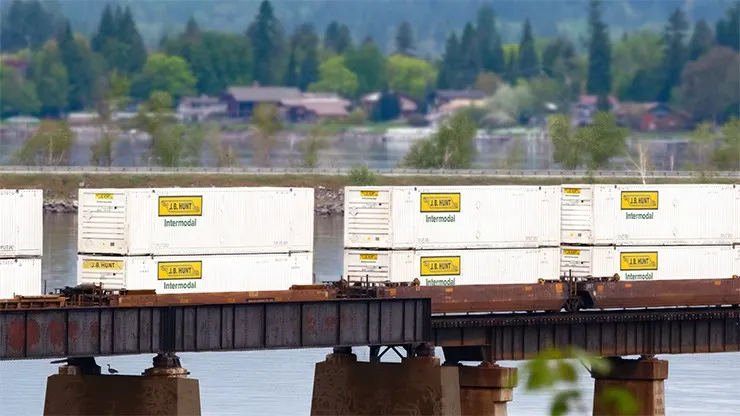
Quick Overview
- J.B. Hunt Transport Services onWednesday reported second-quarter earningsshowing revenue up 19% year-over-year to $3.5 billion, driven primarily by increased freight volumes across most segments, including intermodal.
- The company's intermodal segment operating revenue increased 22% year-over-year to $1.75 billion; segment volumes grew 10% year-over-year to over 578,000 loads, setting a quarterly record. Darren Field, Executive Vice President and President of Intermodal, stated duringa conference call with analyststhat this marked the segment's first double-digit growth in over a decade.
- "We continue to see significant highway-to-rail conversion opportunities in the East, especially as truck rates rise, fuel prices increase, and truck capacity tightens, making intermodal an increasingly attractive option for shippers," Field said.
In-Depth Insights
Tightening truck capacity and rising rates have, in recent months,pushed shippers toward intermodal。
J.B. Hunt reported that gross revenue per intermodal load increased 11% year-over-year, primarily due to higher fuel surcharge revenue, customer rate increases, and changes in freight mix. Excluding fuel surcharges, revenue per load increased 1% compared to the prior year, the company said.
Spencer Frazier, Executive Vice President of Sales and Marketing, said the company's strongest customer engagement areas are focused on highway-to-rail conversion, dedicated fleet services, and securing safe and reliable capacity. He added that customers have initiated more off-cycle, smaller-scale bids to align pricing with rising capacity costs.
The company has been advancing productivity improvements across its operations. For example, in the intermodal segment, according to its earnings report, it has seen reduced empty container moves and lower container storage fees.
Although J.B. Hunt welcomed its intermodal performance in the second quarter, Field said the company's focus is on maintaining discipline to ensure growth is sustainable over the long term. The company noted that its intermodal available capacity could still be 10% or more.
Field said that as volumes accelerate, the company is actively communicating with its rail providers regarding resource planning to support current and future demand. He added that conversion activity is experiencing levels not seen in over a decade.
One factor that could impact the company's intermodal growth is driver availability, which has been affected byenhanced enforcement of commercial driver's license issuance.
Field said the driver shortage impacting truck capacity has spread to the drayage market.
"In this environment, our owned drayage strategy is a significant competitive advantage because we own our tractors, containers, and chassis, and primarily use company drivers," he said.
Field said limiting the use of third-party drayage capacity allows the company to better control and maintain the customer experience.
President and CEO Shelley Simpson said during the call that available capacity across the company's segments means more opportunities.
"The beauty for us in working with customers is that we can help them convert to intermodal," she said. "We can build them better fleets, and we have ample capacity to assist them in over-the-road and last-mile."