
No Bubble Concerns for the Freight Industry in 2021: Tight Capacity Acts as an Industry 'Guardrail'
After hitting a low point in 2020, the U.S. freight industry is experiencing a strong recovery. Despite surging spot prices and robust demand, industry experts believe that due to factors such as driver shortages, the chip crisis, and stricter regulations, capacity expansion is limited, and this boom will not form a bubble in the short term.
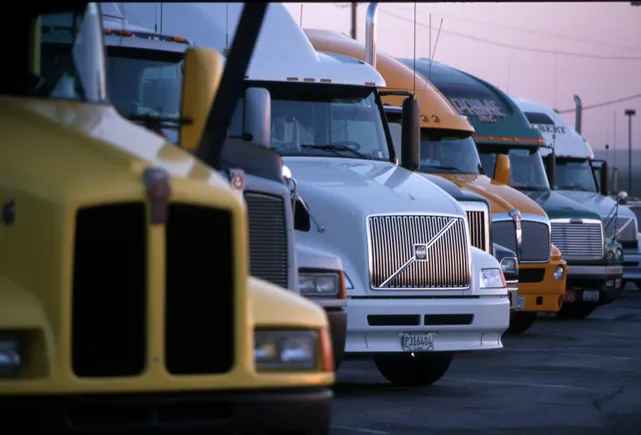
The cycle of boom and bust affects every industry in North America, but perhaps no industry feels the pulse of economic ups and downs as deeply as freight. To build a successful fleet, managers must guide carriers through economic cycles, which means weathering freight recessions. According to Convoy, the United States has experienced three freight recessions in the past decade, all occurring during economic expansions.
This volatile cycle makes analysts often wary of signs of the next industry-wide bubble. However, the current situation may be different.
Currently, the freight industry is undergoing a recovery, a stark contrast to a year ago when spot truckload rates fell to painful lows. Since then, spot rates have climbed significantly, from $1.59 in May 2020 to $2.66 in March 2021, according to DAT data. Considering the economy was in recession and the world was dealing with the COVID-19 pandemic at the time, this increase over 10 months is particularly notable.
In the coming weeks, more publicly traded trucking companies will report earnings. Analysts expect strong results, and not just for the first quarter. Brent Hutto, chief relationship officer at Truckstop.com, said this month that strong pricing will continue through 2021. Hutto said Truckstop.com forecasts freight volumes will jump 10% in 2021 compared to 2020. This is nothing short of a freight boom.
Another sign of the recovery's authenticity is that independent drivers are heading to FMCSA to apply for motor carrier authority. According to Avery Vise, vice president of trucking at FTR, FMCSA granted carrier authority to 57,978 entities in 2020, a 36% increase from 2019. This contrasts sharply with the bleak weeks of April and May 2020, when freight hit bottom as the initial panic buying in North America during the early pandemic faded.
But experts do not believe this recovery will quickly spawn a bubble about to burst. One reason is that capacity has not yet been unleashed in large quantities to meet demand, and doing so requires overcoming many obstacles, noted Dean Croke, chief analyst at DAT.
Croke said fleets are struggling to find enough drivers. Even when recruiting new trainees, the pandemic has lengthened training times and the process of obtaining licenses through government agencies. Croke also mentioned that the new FMCSA Drug and Alcohol Clearinghouse has removed 50,000 drivers from the market.
Additionally, new truck production is constrained. The global semiconductor shortage has slowed production of Class 8 trucks.
For the freight industry, it is as if guardrails have been placed on the highway, preventing it from sliding toward either boom or bust.
"Tight capacity will last for a while," Croke said. "I don't see how they can get more trucks on the road."
The current situation differs from 2018-2019, when the freight industry boomed amid an e-commerce spending spree. But as carriers flooded the market with more, newer trucks, the available truck supply quickly exceeded demand, and bankruptcies followed. Celadon, one of the largest contract carriers in the nation, filed for bankruptcy in December 2019.
Currently, the industry is doing its best to meet demand with existing resources.
"The freight industry is very optimistic because capacity is king," said Nikhil Sathe, managing director at Logisyn Advisors. "(Freight) has been a big winner throughout the pandemic."
But can the winning streak continue?
One large fleet has already tasted the benefits of economic activity. J.B. Hunt recently reported first-quarter revenue up 15% year-over-year and net profit up 39.6% to $146.6 million. Despite ongoing pandemic disruptions, February winter storms, and lower intermodal volumes, results remained strong.
National Bubble
Economic bubbles form when assets are overvalued. When something pricks the bubble, asset values shrink rapidly, and the revaluation of large amounts of assets such as housing or financial stocks sends shockwaves through the economy.
The most recent and typical example is the Great Recession of 2007-2009, rooted in overvaluation in the housing sector. When housing prices collapsed, the impact on financial markets was unprecedented. Because banks and investment firms were deeply involved in housing, the recession was especially painful and severe. Housing is a major component of the U.S. and global economy.
In contrast, freight often serves consumers. It is usually an indicator of recession rather than a cause. However, even without threatening the overall economic process, bubbles can still form in various segments.
Recent Recession Timeline
- July 1990 to March 1991: The Gulf War recession lasted 8 months, as Iraq's invasion of Kuwait drove up oil prices, leading to declines in manufacturing trade sales.
- March 2001 to November 2001: The 9/11 recession lasted 8 months, triggered by the dot-com bubble burst and the 9/11 attacks.
- December 2007 to June 2009: The Great Recession lasted 18 months, GDP fell 4.3%, and the housing bubble burst was the main cause.
- February 2020 to present: The COVID-19 recession is ongoing.
The progress of the U.S. economy is still undecided. The economy remains technically in recession, although the pandemic's impact seems to be slowly fading, and some economists say the U.S. has entered an expansion.
According to the Labor Department, about 916,000 jobs were added in March, and the unemployment rate fell to 6%.
Meanwhile, parts of the economy are red-hot, while others are not.
"It's a two-speed economy," said Rajeev Dhawan, director of the Economic Forecasting Center at Georgia State University's business school. "Some industries are doing very well, others are barely surviving."
Other experts point out that the economy may be on the verge of a turning point.
Federal Reserve Chairman Jerome Powell said in a recent interview on "60 Minutes" that the economy appears to be at an "inflection point." Powell said the economy could begin to grow significantly, but the "major risk" of the coronavirus could spread again if people let their guard down.
Dhawan also warned against excessive optimism as vaccines are distributed in the U.S., noting that COVID-19 cases are rising in places like Germany.
"There is excessive optimism about the economic recovery," Dhawan said. "Look at the rest of the world, they are locking down."
But this duality currently seems to favor the North American freight industry. The North American economic recovery requires transportation and assistance in moving pandemic-related supplies such as personal protective equipment, food, medical supplies, and household goods.
In other words, given high spot rates, the freight industry is prepared to handle various scenarios in 2021 with ease. Freight demand this year does not appear weak or fragile.
Active Bull Market
Sentiment about the economy is often expressed through what British economist John Maynard Keynes called "animal spirits." Keynes believed economic decisions are often driven more by emotion than logic. Over time, Wall Street adopted two animal mascots.
The bear represents the willingness to retreat and hibernate during tough times. The bull charges forward.
In April 2020, even as the pandemic halted the economy, XPO Logistics CEO Bradley Jacobs said he was a "pragmatic bear" in the short term, a bull in the medium term, and a "super bull" in the long term. Jacobs accurately predicted that e-commerce growth, already in double digits last year, could accelerate in the post-pandemic era.
In his latest letter to shareholders, Jacobs said the bull market has now arrived.
"The bear has left the building, and the bull has arrived early," he wrote on April 13. "After a painful 12 months for almost everyone, 2021 and 2022 will be major recovery years for the vast majority of our customers."
But the pandemic still worries some financial bears, while vaccines make others bullish. Sathe said he is bullish regarding logistics-related M&A.
"The buyer pool is getting bigger," Sathe said.
During the pandemic, private equity and investment firms noticed the importance of freight and the relative resilience of fleets during difficult times. E-commerce is a major driver of freight, suggesting freight might be a solid investment. On March 25, Roadrunner announced it raised $50 million from private equity channels.
M&A activity was largely quiet in 2020, but as time passed and freight's value became apparent, deals began to emerge. TFI International acquired nine companies by the end of November 2020. In January, TFI acquired UPS Freight for $800 million.
Investors and carriers seem confident.
Recovery Continues—But Not Overinflated
Sathe pointed to pent-up consumer demand, with savings accumulated and federal stimulus funds received—about $2,000 per eligible American if 2019 income was below $75,000.
Consumers have been spending since summer, with lockdowns and work-from-home policies giving them ample opportunity to renovate their homes. Inventories have been depleted, and trucks are being pulled from ports and warehouses to meet e-commerce-driven demand.
"Consumer spending is getting stronger and stronger," Sathe said.
Croke said such sustained trends have surprised him. In 2020, he had doubted the e-commerce boom would end in the first quarter of 2021, with consumers taking a breather. Instead, freight business has remained strong as the economy recovers and vaccinations increase.
Croke said imports are a major contributor to this strength, with March imports up 57% year-over-year. Croke said he hears people comparing it to the "Roaring Twenties" a century ago—when after a pandemic and world war ended, the U.S. experienced a decade of unparalleled growth, followed by a terrible crash.
Croke believes contract rates will remain high for most of this year. Dry van spot rates will remain high and stable, while flatbed and reefer spot rates may rise in the coming months. Flatbeds will benefit from the construction and residential building boom, and reefers will see strong demand as the agricultural season begins, he said.
Croke said multiple factors in the freight market have temporarily broken the traditional boom-bust formula.
"I don't think there's a bubble," Croke said.
