
The Rise of Less-Than-Truckload Freight: How E-Commerce Is Reshaping Mid-Mile Transportation in the Supply Chain
The explosive growth of e-commerce is reshaping the middle segment of the supply chain—mid-mile transportation. Over the past five years, less-than-truckload (LTL) freight has grown at a pace far exceeding that of full truckload (TL), becoming a key pillar of e-commerce fulfillment. Drawing on industry executive insights and data, this article analyzes the reasons behind LTL's rise, the challenges it faces, and its future trends.
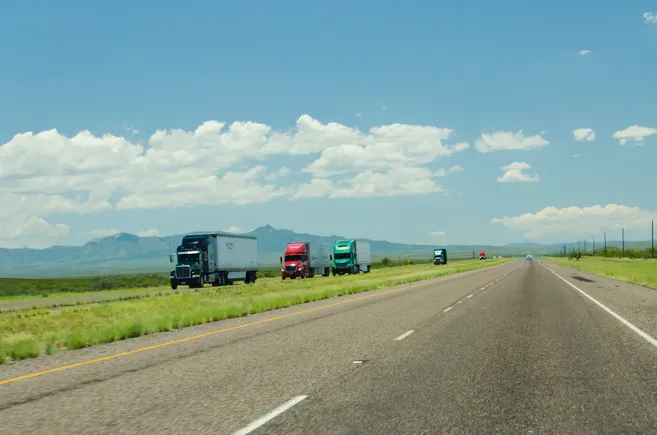
In the supply chain, what lies between the first mile and the last mile? Logically, that is the position of middle-mile transportation. However, in logistics practice, this middle segment has historically not been a priority for every shipper.
Over the past five years, e-commerce has changed this situation.
"Middle-mile transportation has transformed from a commoditized ancillary link into a competitive advantage in today's environment," Mac Pinkerton, president of North American surface transportation at C.H. Robinson, told Supply Chain Dive, a sister publication of Transport Dive.
The story of how e-commerce has changed logistics is not unfamiliar to supply chain stakeholders. Consumers expect fast and free delivery, a notion many logistics professionals consider unrealistic.
"Freight is not free," said Meg Schmidt-Duncan, director of strategic sourcing at Koch Logistics, adding that costs "will always show up somewhere."
Companies are shipping in smaller volumes and with higher frequency, which presents logistics managers with increasingly complex network management challenges and is costly for all parties involved.
"You're not shipping full truckloads anymore," said JP Wiggins, co-founder and vice president of logistics at 3Gtms. "You're in a different supply chain environment"—one centered on e-commerce and less-than-truckload (LTL) freight.
The rise of e-commerce and LTL freight
If long-haul full truckload is the king of middle-mile transportation, then LTL freight is the challenger rapidly ascending to the throne.
"In terms of industry trends, over the past four to five years, LTL growth has significantly outpaced North American full truckload," Pinkerton said.
LTL may be the biggest beneficiary of e-commerce growth. According to U.S. Census Bureau data, in the second quarter of 2016, e-commerce accounted for 7.5% of total retail sales (not seasonally adjusted), with sales exceeding $91 billion. By the second quarter of 2021, that share had risen to 12.5%, with sales slightly exceeding $211.7 billion.
Although consumer purchasing was already trending digital before the pandemic, social distancing measures acted as a catalyst for e-commerce. Brick-and-mortar retailers began building e-commerce capabilities, and consumer goods companies have aggressively entered the space over the past three years or so, exploring ways to operate beyond traditional retail channels, Pinkerton said.
"The pandemic accelerated omnichannel and e-commerce development by five years. That must be clear," Wiggins said. "Now, whether B2B or B2C shippers, they are moving inventory from anywhere to where it's needed. This is a fundamental shift."
Goods that might have previously required a single full truckload shipment are now being split into multiple shipments, Jonathan Kletzel, transportation and logistics partner at PwC, said in an email.
"A significant amount of freight is shifting from full truckload to larger regional distribution models, and then to LTL long-haul transportation," Schmidt-Duncan said.
This trend is also reflected in employment data. U.S. Bureau of Labor Statistics data show that employment growth in the full truckload sector has been relatively stagnant, while LTL employment has grown significantly (excluding the industry-wide decline in 2020 due to the pandemic).
Increased trust in LTL carriers
As e-commerce demand surges, inventory visibility has also extended to goods in transit. Pinkerton noted that some goods in middle-mile transportation may be sold online before they even arrive at a retailer's warehouse. Consumers' expectations to engage early in the inventory's logistics journey have raised the operational risk for retailers.
"This is a huge change that has occurred over the past few years," Pinkerton said.
In the second half of 2017, electronic logging devices (ELDs) came into use. Although their primary function is to track driver hours of service, technology vendors often add GPS functionality, Pinkerton said. Suddenly, stakeholders gained greater visibility.
"This expanded rapidly with on-time, complete delivery and inventory flow planning," he said. "Technology in this area—providing visibility into where a truck is at any point in time—improved significantly during that period."
However, Pinkerton also mentioned that the trucking community resisted somewhat, insisting on tracking cargo rather than drivers. This gave rise to sensor technology.
"LTL carriers... are no longer a black box regarding when goods will arrive. Due to investments in digital innovation, shippers can trust them more," Kletzel said.
More freight volume means more work for supply chain managers, but it also enables shippers to be more strategic and ultimately reduce risk, Kletzel believes.
LTL: tight and expensive, but also an equalizer
For many shippers, the current LTL market is chaotic. Schmidt-Duncan said she receives emails from carriers daily stating that capacity for the day is full or that they are only accepting limited freight in specific markets. These notices may arrive before noon.
Shippers must then decide whether to hold the freight and forgo on-time delivery or turn to another carrier. If they turn to the spot market, costs could be about 30% higher, Schmidt-Duncan said.
"The whole situation keeps deteriorating and has gotten out of control," she said.
Retail executives have particularly complained about high freight costs in recent earnings calls. Although the headwinds won't last forever, these expenses still need to be explained.
"Logistics teams have been securing freight capacity, and we need to get goods to our distribution centers and stores to meet strong demand. We paid higher rates when necessary," TJX CEO Ernie Herrman said on an investor call.
David Heller, vice president of sales at Redwood Logistics, said shippers are seeking help to reduce LTL costs.
"Capacity is at record tightness, and whenever that happens, rates also reach record levels," he said.
But LTL can be a democratizing tool. With e-commerce, consumers can buy goods directly from a variety of businesses, bypassing the brick-and-mortar retail intermediary. The key lies in middle-mile transportation; transportation managers who can use it strategically can bring advantages to their companies.
"I believe LTL is a key enabler of local fulfillment, allowing businesses to compete with national brands," Kletzel said. "To succeed, they need to serve local fulfillment through more direct, smaller-volume shipments to better manage local inventory—especially for slower-moving SKUs."
When shippers look for LTL partners, carriers are of course also looking for shippers. Pinkerton said the successful companies will be those that can provide customers with an end-to-end logistics experience, including last-mile delivery and full visibility.
Regarding the future of middle-mile transportation, other freight modes may become more important, Kletzel believes. He believes rail transportation will grow in importance, whether through LTL networks or domestic intermodal. Supply chain leaders are also discussing the use of vertical takeoff and landing aircraft in congested metropolitan areas, Kletzel said.
But predicting the future is difficult, especially given the speed at which e-commerce has changed middle-mile transportation.
"People are shipping differently now," Wiggins said. "How will this evolve? I don't know. But it has already evolved substantially."
Editor's note: This article is part of Supply Chain Dive's fifth anniversary series. Seethis roundupfor a look back at important stories in the supply chain since 2016.