
Congress may soon overturn California's vehicle emission standards waiver
The U.S. Congress may use the Congressional Review Act to overturn the EPA's waiver granted to California for vehicle emissions, a move that could hinder air quality improvements. The Senate could vote as early as next week, and the House passed the relevant resolution on May 1.
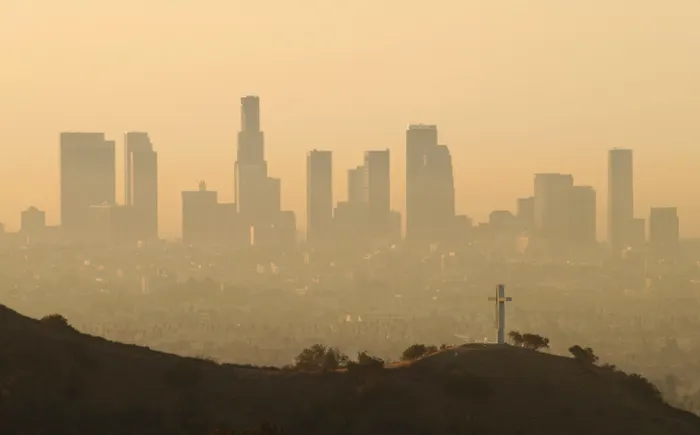
Environmental and public health experts warn that efforts to improve air quality will be hindered if Congress, under the Congressional Review Act, overturns an EPA waiver granted to California that allows the state to require all light-duty trucks and passenger cars to achieve zero emissions by model year 2035. According to Politico, the Senate could vote as early as next week to revoke the waiver.
"Without these regulations, manufacturers are less likely to produce cleaner cars and trucks," said Katherine García, director of the Sierra Club's Clean Transportation for All campaign. "We're concerned that if these waivers are overturned, states will face more challenges in meeting their air quality goals. This means more asthma and more health problems for residents living or working in areas most affected by car and truck pollution."
The U.S. House of Representatives passed a resolution on May 1 to disapprove the waiver under the Congressional Review Act. That law allows Congress to overturn certain regulations issued in the final months of a presidential administration. The House action ignored a March 6 legal ruling by the Government Accountability Office that the Clean Air Act's waiver of preemption is not subject to the Congressional Review Act because the waiver notice does not meet the Administrative Procedure Act's definition of a "rule" but rather constitutes an "order."
Nonpartisan Senate parliamentarians have also separately determined that the EPA waiver is not subject to the Congressional Review Act. On May 1, 20 Democratic senators signed a letter to Senate Majority Leader John Thune, a Republican from South Dakota, and Majority Whip John Barrasso, a Republican from Wyoming, warning that ignoring the parliamentarians' advice would have "far-reaching and potentially irreversible consequences." The letter stated: "If the current Senate majority opens this door, the Congressional Review Act could be weaponized to retroactively repeal decades of agency actions."
California's role in setting vehicle emission standards
At the heart of this debate is California's authority to set its own vehicle emission standards, a power that dates back decades. Studies in the 1950s found that hydrocarbons and nitrogen oxides from vehicle exhaust reacted in sunlight to form smog. The Air Quality Act of 1967 prevented states from setting their own emission standards but created an exception for California, recognizing the state's unique geography and growing population. In 1990, Congress amended the act to allow other states to adopt California's standards; currently, 17 states and the District of Columbia have adopted some of California's regulations.
"I grew up in Los Angeles, so compared to when I was a kid, the air quality here has improved dramatically," said Ed Avol, professor emeritus at the Keck School of Medicine of the University of Southern California. But he said that despite the progress, "we now have a better understanding of the health effects of air pollution at more subtle levels."
Air pollution has long been linked to lung disease, but Avol explained that airborne toxins can also enter the human bloodstream. "It affects cognitive health, affects children's ability to learn in school... affects the rate at which we experience cognitive decline, and has been shown to be linked to Alzheimer's disease and dementia," he said.
According to data from the California Energy Commission, the transportation sector accounts for about 50% of the state's greenhouse gas emissions, nearly 80% of nitrogen oxide pollution, and 90% of particulate matter pollution from diesel engines.
Congress and the Trump administration are targeting the Advanced Clean Cars II regulation adopted by the California Air Resources Board in 2022. Often referred to as a ban on the sale of gasoline-powered vehicles or an electric vehicle mandate, the regulation actually allows the sale of plug-in hybrid electric vehicles and hydrogen fuel cell vehicles, as well as electric vehicles.
Industry lobbyists seek to overturn clean car standards
Some automakers initially supported the Advanced Clean Cars II regulation. General Motors said in a 2022 letter to the California Air Resources Board that it was "committed to emission reductions consistent with the goals of the California Air Resources Board." Joe Mendelson, former senior legal advisor for policy and business development at Tesla, said in a 2022 congressional hearing: "The proposal is both achievable and paves the way for California to lead the electrification of the light-duty vehicle sector... Tesla encourages the board to adopt the Advanced Clean Cars II regulation today."
"There was a massive campaign by the oil industry and the auto industry, and they were extremely adamant about overturning these waivers."
—Katherine García, director of the Sierra Club's Clean Transportation for All campaign
But the Alliance for Automotive Innovation, an industry lobbying group, said in a December 11, 2024 memo that automakers are unlikely to meet the sales targets required by Advanced Clean Cars II. The alliance noted that as of the memo's date, 11 other states had adopted California's standards, representing about 30% of the U.S. auto market. The American Fuel & Petrochemical Manufacturers, representing the oil industry, launched a so-called "seven-figure major issue campaign" in 2024 "aimed at raising awareness of various federal policies designed to end gasoline-powered cars."
"Based on our conversations with House members, there was a massive campaign by the oil industry and the auto industry, and they were extremely adamant about overturning these waivers," said García of the Sierra Club.
California is not backing down. According to the California Air Resources Board, no Clean Air Act waiver has ever been revoked, and the only waiver ever denied was quickly reversed. Lindsay Buckley, communications director for the California Air Resources Board, said in an email: "The House's passage of the Congressional Review Act resolution is inconsistent with precedent and violates the plain language of the Congressional Review Act itself. The vote does not change the California Air Resources Board's authority. The California Air Resources Board will continue its mission to protect the health of Californians affected by harmful air pollution."
A setback for state and local air quality plans?
According to the American Lung Association's 2025 "State of the Air" report, more than 156 million people—46% of the U.S. population—live in areas with unhealthy levels of ozone or particulate pollution. Five of the 10 most polluted counties in the nation are in California.
While the EPA sets national ambient air quality standards, state and tribal governments are responsible for meeting them. State and local governments that fail to meet EPA-set targets must develop implementation plans detailing how they will reduce emissions to achieve the goals and maintain air quality. These plans may include stricter pollution regulations. "We're concerned that if these waivers are overturned, states will face more challenges in meeting their air quality goals," García said.
"The innovations California has produced to reduce air pollution benefit everyone and have greatly improved public health," said Michael Kleeman, a professor in the Department of Civil and Environmental Engineering at the University of California, Davis. Kleeman noted that today's cars are "extremely clean" compared to those from decades ago.
However, according to the American Lung Association, climate change is exacerbating ozone pollution. "Our best estimate is that you need to reduce nitrogen oxide emissions by about 40% or 50% to make progress on ozone," Kleeman said. "You can't achieve that unless you can electrify a large portion of the vehicle fleet."
