
Frequent storms and increasing volatility prompt some ports to address risks—but most have yet to act
Based on in-depth reporting on cases such as the Port of New York and New Jersey and the Port of Los Angeles, this article analyzes recovery experiences and resilience-building progress at ports following extreme weather events like Hurricane Sandy. Experts note that port supply chains are highly interconnected, but most ports lack formal climate resilience planning, and there are no mandatory federal standards.
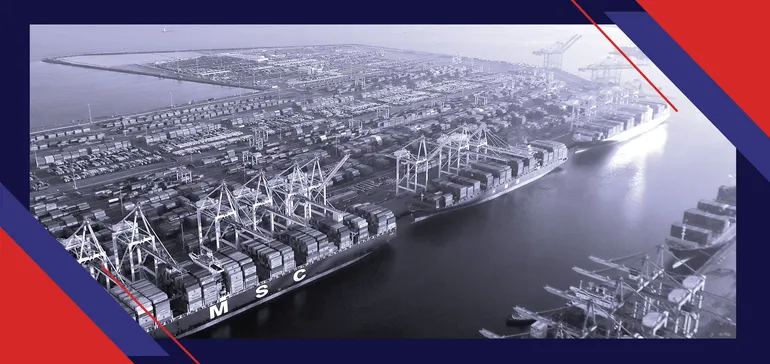
As climate change leads to more frequent storms and greater intensity fluctuations, ports worldwide are facing unprecedented operational risks. However, although some ports have begun planning for sea-level rise and extreme weather, most remain in a wait-and-see state.
This article is part of a series exploring the impact of climate change and severe weather on logistics networks.Click here to view the full series。
The warning of Hurricane Sandy: Lessons from the Port of New York and New Jersey
In 2012, Superstorm Sandy swept across the New York coast, bringing typical hurricane-force winds, heavy rain, and massive waves, and the region's supply chain infrastructure did not escape unscathed. According to a paper published last year by two University of Rhode Island researchers, John Ryan-Henry and Austin Becker, the Red Hook Container Terminal at the Port of New York and New Jersey resumed receiving cargo only eight days after Sandy made landfall, with terminal tenants reporting up to five feet of water in their warehouses.
"Hurricane Sandy was clearly a wake-up call for the region," said Joshua DeFlorio, director of resilience and sustainability at the Port of New York and New Jersey, in an interview. "That was true for the port authority, and also for the port and its tenants."
That wake-up call prompted the port to conduct a study in 2016 on preparedness for future coastal flooding events—events expected to become more frequent as global warming progresses. (The port authority declined to make the report public; a records request under New York's Freedom of Information Law is still pending.) The impact does not stop at the port itself: maritime supply chains are highly interconnected with rail, road, adjacent warehousing space, and electrical infrastructure, and disruption at any point can ripple across the entire system.
This interconnectedness was especially evident during Hurricane Katrina, when a 28-foot storm surge struck a cold storage warehouse. Becker, a professor in the Department of Marine Affairs at the University of Rhode Island, recalled: "That cold storage warehouse was full of chicken and pork bellies, all wrapped in plastic bags, and they were washed into the city by the 28-foot storm surge, scattered everywhere, and then rotted." Local news reports said the rotting meat lingered in communities for months afterward.
Experts point out that when ports consider the potential impacts of climate change, they must understand how all their assets will respond to sea-level rise. But the level of preparedness varies from port to port.
The report "Climate Change Adaptation Planning for Ports and Inland Waterways," released last year by the World Association for Waterborne Transport Infrastructure (Pianc), states: "Hurricane Sandy remains vivid in the memory of many tenant representatives, which means most can recall which assets and infrastructure were affected and explain how they adjusted or adapted operations in response to future events similar to Sandy."
East Coast: Port of New York and New Jersey increases investment after Sandy
Ryan-Henry and Becker detailed the damage caused by Sandy, showing that the storm damaged the port's berths, fuel pumps, transformers, underground infrastructure, computer systems, trucks, cranes, and other facilities. Losses included cargo delays and diversion to other ports.
Sarah Colasurdo, senior climate resilience specialist at the Port of New York and New Jersey, said the storm prompted numerous operational changes and structural upgrades. But as a landlord port, the facility relies on collaboration with partners to ensure changes are implemented. "The port department established a full emergency command system after Sandy and upgraded its hurricane preparedness plan." In the aftermath of the storm, temporary measures such as flood barriers and building modifications were quickly put in place to prepare for the next hurricane season. But Colasurdo noted: "That's not a sustainable solution, because you don't want to deploy all your labor force to install deployable flood barriers in the precious few days before a storm." A better approach is "passive protection," which involves elevating critical infrastructure to withstand future storms.
"The climate impacts we consider... absolutely do not respect any jurisdictional boundaries."

Sarah Colasurdo
Climate resilience specialist at the Port of New York and New Jersey
Some tenants invested in new ship-to-shore gantry cranes because their motors had been flooded—the new models have raised motors. Other tenants raised their yards to be able to move equipment or containers to higher ground before a storm makes landfall. But even with these measures, it is still not enough to handle all storms. "You can't armor the port for the largest storm surge event," Colasurdo said, so investing in drainage infrastructure is equally important to enable faster recovery after floodwaters intrude.
West Coast: Port of Los Angeles assesses vulnerabilities and flood risk
The Port of Los Angeles is one of the ports reviewing its exposure to sea-level rise, completing a report in 2018 that outlined the facility's exposure to sea-level rise. According to Adrienne Newbold, senior civil engineer at the port, over the past year and a half, the port has focused on implementing the report's findings. The Port of Los Angeles review found that its infrastructure, especially newer facilities, is "extremely resilient." But the report still listed several potential vulnerabilities that could affect port operations as early as 2030. Container terminals have "very low vulnerability" to sea-level rise, but liquid bulk facilities could face temporary flooding by 2030 (the model used 12 inches of sea-level rise plus storm surge). Pump stations and utilities, including transformers and pump houses, could face flooding by 2050 and 2100, respectively.
Since the report, the two major infrastructure projects the port has undertaken that incorporate sea-level rise considerations are the Wilmington Waterfront Promenade and the San Pedro Waterfront—both developments focused on recreational activities rather than cargo movement. "We studied sea-level rise and actually elevated the promenade to accommodate it," Newbold said of the Wilmington project. The port has handled occasional flooding and has experienced a 100-year flood without major challenges, but flooding could pose a threat to some transportation networks over time. Newbold noted that trucks can mostly drive through minor flooding, but three inches of water on rail tracks can halt rail operations. The report shows that some rail infrastructure could be affected by storm surge as early as 2030, but permanent sea-level rise poses a greater threat. "Rail infrastructure will not be operable under permanent inundation," the report warned. And elevating rail is no easy task. "You have to elevate the entire network," Newbold said, but rail connections on port terminals are considered resilient. Ultimately, the responsibility for elevating rail infrastructure falls mainly on the railroad companies.
Railroad companies have acknowledged the threat. Union Pacific said in a 2019 report that it is working to increase the resilience of its infrastructure to climate change. CSX stated in its 2019 CDP filing that sea-level rise could "lead to decisions to relocate assets in coastal cities and ports to more inland areas." This underscores the point experts emphasized to Supply Chain Dive: ports are interconnected systems, and collaboration with partners must be a priority.
Ports, partners, and a shared vision for the future
The interconnectedness of supply chain infrastructure was a key focus of Pianc's report last year, using the Port of Rotterdam as an example. "As far as I know, they are one of the ports that have done the most research on these types of interdependencies," Jan Brooke, chair of Pianc's permanent working group on climate change, said in an interview. A port can turn itself into a fortress against sea-level rise, but ensuring port operations involves numerous third parties. Problems with any partner can create trouble for the port, Brooke said: "I suspect most ports haven't truly understood this yet."

Pianc recommends that ports inventory their associated assets and determine the criticality of infrastructure. Colasurdo said that in New York, this means building relationships with utilities, port tenants, and other government agencies. The Pianc report noted that the lack of electricity after Sandy was one of the biggest problems many tenants faced. "The port authority is working with local utility providers to better protect port electrical equipment in preparation for future flooding events." Colasurdo said that partners using the same sea-level rise projections helps share data and a common vision for the future. "The climate impacts we consider... absolutely do not respect any jurisdictional boundaries. They don't care where our port ends and the highway begins."
But as ports begin climate resilience efforts, experts say they are largely working alone, although professional organizations like Pianc have begun to facilitate knowledge sharing.
Lack of standards and mandates
Although Los Angeles and New York have initiated resilience planning, according to a recent survey by Becker, they may be in the minority among U.S. ports. The survey focused on ports that completed resilience assessment planning processes over the past decade (Becker's research has not been published, but he discussed draft findings in an interview). "It turns out not many have actually completed it," he said. "There are about 300 ports in the U.S.... We only found about 10 that have completed the resilience planning process." Brooke said ports typically begin engaging in resilience planning only after experiencing a risk event. "Most ports start taking climate change seriously either right after they've been hit or right after a near miss with extreme weather."
Becker noted that without an assessment of potential impacts on port facilities, it is difficult to plan for sea-level rise, and that is an important first step.
"There are about 300 ports in the U.S.... We only found about 10 that have completed the resilience planning process."
Austin Becker
Professor in the Department of Marine Affairs at the University of Rhode Island
There was a time when federal guidance existed. An executive order issued during the Obama administration required any infrastructure project using federal funds to consider sea-level rise impacts in its design. Benjamin Sweeney, a master's student at the University of Rhode Island whose thesis studies engineering standards for sea-level rise in port infrastructure, noted that the requirement was rescinded by the Trump administration. "I think that executive order, although rescinded under the Trump administration, at least... provided specific guidance that engineers could use when justifying why they designed to a certain level."
Incentives for change
As part of his thesis research, Sweeney surveyed 85 port and marine infrastructure engineers. The survey again showed a lack of sea-level rise documentation: 64% of respondents said there were no "policy or planning documents explaining how future sea-level changes should be incorporated into port infrastructure projects." Large port infrastructure projects are costly. Just retrofitting cranes at the Red Hook Container Terminal after Sandy cost "approximately $160,000 per crane" (according to the Ryan-Henry and Becker paper). Many other projects carry price tags in the hundreds of millions of dollars. "Ensuring that investments in these projects are sustainable over time is very important," Sweeney said.
The federal government may provide more formal guidance in the future. Becker said he is working with the U.S. Army Corps of Engineers and the Cybersecurity and Infrastructure Security Agency at the Department of Homeland Security to develop resilience planning guidance for port stakeholders. The Biden administration's infrastructure proposal mentions ports multiple times. In a fact sheet on the proposal, the White House said: "President Biden is calling on Congress to invest an additional $17 billion in inland waterways, coastal ports, land ports of entry, and ferries, which are vital to our nation's freight movement." The proposal mentions a "Healthy Ports" program to address air pollution at these facilities but does not specifically address sea-level rise. Details of the program have not been released, but the White House said it aims to "mitigate the cumulative impacts of air pollution on communities near ports, which are often communities of color." A White House spokesperson did not respond to multiple requests for comment on sea-level rise considerations in the infrastructure bill.
Becker noted that even with more guidance from the public sector, without mandates, many ports may still not undertake resilience planning. He mentioned that California has a mandate requiring ports to conduct resilience planning for their facilities, but there is no such requirement nationwide. "There really isn't a good incentive structure right now to get them to do this kind of research," he said. "Usually there are some staff members who recognize its importance and push it forward, but that's not always the case." Becker said the incentive structure could take the form of federal grants requiring ports to conduct such studies. In the meantime, shippers will have to contend with a port ecosystem where some facilities are preparing for climate change while others have not yet acted.
Correction: A previous version misstated the size of the Red Hook Container Terminal.