
California wildfires are frequent and more intense, logistics network expansion faces severe tests
In 2020, California wildfires burned over 4.25 million acres, and the 2021 fire season is expected to be worse. As logistics networks expand in densely populated areas, wildfires are threatening key nodes such as warehouses, highways, and railways. This article analyzes the specific impacts of wildfires on supply chains and introduces how companies can enhance resilience through data tools, emergency drills, and insurance strategies.
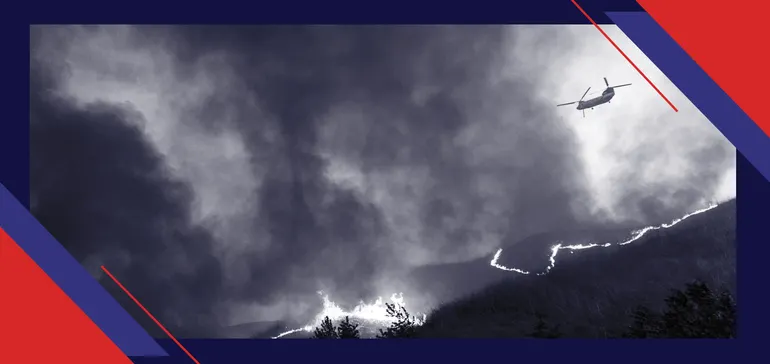
In 2020, California lost 4,257,863 acres to wildfires, involving 9,917 fire incidents, with a total of 10,488 structures damaged or destroyed that year. And this year's wildfire season is expected to be even more severe than 2020.
Jon Davis, chief meteorologist at Everstream Analytics, noted that California has historically had wildfires, but over the past three to four decades, the number of days with conditions conducive to wildfire spread, such as high wind speeds and low relative humidity, has doubled. Reduced snowpack and earlier snowmelt have led to longer, more intense dry seasons, making vegetation more flammable.
This places higher demands on logistics managers: they must anticipate more frequent and intense fires, because wildfires not only destroy homes and buildings but also clog transportation arteries, making supply chain operations difficult.
The five-year average number of fires from January to May 9 is 905, but in the same period in 2021, California saw 1,812 fires—twice the five-year average, with three times the area burned. And the peak of the fire season—usually from September to November—has not yet arrived, and the season is lengthening. Cal Fire, under the California government, estimates the fire season has extended by 75 days, with climate change seen as a key driver.
Critical chokepoints: Risk of disruption to highways and railways
B.J. Patterson, CEO and co-owner of Pacific Mountain Logistics, based in San Bernardino, California, said California has several key transportation chokepoints, mainly on routes heading north from Southern California. The biggest challenge is how to develop contingency plans when these routes are cut off.
Interstate 15, leading to Las Vegas and Salt Lake City, and Interstate 5 both pass through fire-prone areas. To avoid I-15, drivers might take I-10 to US 95 to Las Vegas, then cut back to I-15, which can easily add a day and a half to the trip.
Patterson said sometimes these routes are cut off for up to a week. In Southern California, a week's worth of freight volume exceeds what most regions in the U.S. handle in two months. These chokepoints affect not only interstate highways and trucking but also rail transport.
Deteriorating air quality also imposes a health burden on workers. Bindiya Vakil, CEO of Resilinc, said workers must load and unload cargo outdoors, which puts them at risk.
Rethinking warehouse siting and inventory strategies
Despite the fire risk, many logistics managers still choose to expand their supply chain networks in California. Real estate firm CBRE reports that California's Inland Empire (adjacent to Los Angeles) was the most in-demand market last year, and the state's Central Valley is also one of the emerging markets nationwide.
Kathy Fulton, executive director of the American Logistics Aid Network, pointed out that in recent years, driven by the Amazon effect, warehouses have been built closer and closer to population centers. She emphasized that the factors increasing efficiency also increase vulnerability.
Distribution centers are close to the population areas that rely on them to meet local demand, Fulton said, which increases the likelihood of supply chain disruption, not just road issues.
Davis said that, considering wildfire risk, some companies are considering moving warehousing operations out of high-risk areas or sourcing from suppliers outside potential fire zones. But this is not feasible for all industries. Vakil cited food as an example: it's perishable—how do you manage Safeway's distribution centers? You can't set up replenishment supplies 1,000 miles away; getting in and out would both be difficult. Industries like technology or pharmaceuticals have more leeway, because inventory can be stored elsewhere and still support operations.

To mitigate potential impacts, Vakil suggested that companies could periodically transfer some inventory outside the region during high-risk periods or increase buffer stock. This way, they can keep most inventory near demand while ensuring supply remains available if sites become difficult to access.
However, many companies still worry about insufficient buffer stock. Patterson recalled that after the recession ended a decade ago, most retailers became averse to holding inventory due to the cost of expensive excess stock. He called it the "2008 syndrome." Supply chains shifted to just-in-time to avoid risk, which exposed shortages in the early days of COVID-19. In events like wildfires, low safety stock can cause serious problems—if inventory is inaccessible or transportation is delayed by road closures, the supply chain can grind to a halt.
Data, drills, and insurance: Tools for managing fire risk
Unlike hurricanes, wildfires, tornadoes, and earthquakes give no advance warning. Vakil said you can only respond reactively. But wildfires are seasonal, and companies can prepare by understanding which supplies, suppliers, and distribution centers are located in high-risk areas in California or other states.
Even with planning, periodic disruptions can still occur, but with advance planning, they don't have to cause large-scale chaos.
Shehrina Kamal, vice president of intelligence solutions at Everstream Analytics, said risk management used to be ad hoc, but now companies are increasingly adopting technology solutions. She said, "The last thing you want as a risk manager is to scramble for resources in a crisis state."
Real-time fire monitoring and centralizing all company data for easy access help businesses understand inventory locations, the impact of fires in specific areas, revenue risk when inventory is damaged or unavailable, and connect information from different sources.
Logistics companies like Patterson's conduct annual wildfire and earthquake emergency drills, developing evacuation plans and business continuity plans that outline how to handle operational issues and communication with customers during disruptions. Communication trees designate which employees contact which customers and how inventory is handled. Pacific Mountain Logistics can transfer products as needed to fulfill other orders, data is backed up to the cloud, remote work is supported, and generators are on hand in case of power outages, along with emergency food, water, and first-aid supplies in case employees are stranded on site.
Property insurance can protect warehouses or manufacturing sites and their contents from wildfire losses, but business interruption insurance can be very expensive. Patterson said deductibles are high, and it only helps if a business is directly affected over the long term, such as a warehouse or factory burning down, but the impact must be large enough to justify a claim.
Developers carefully assess wildfire risk when building, partly because insurance costs can be high. Vakil also mentioned another type of insurance—contingent business interruption insurance, which only covers physical loss at specified locations. Companies relying on third-party logistics or contract manufacturing sites should explicitly list those sites in their policies to protect against damage from events like wildfires.
She stressed that mapping the supply chain, listing all sites that make up the chain, and including them all in the policy is crucial.
Compound crises and ongoing disruptions
California wildfires also come with other risks, such as preventive rotating power outages. Vakil mentioned that in 2020, PG&E shut off power due to high wildfire risk, and similar proactive measures could be taken again in the future. Patterson's facilities are equipped with backup generators to handle outages. He said they have experienced rotating outages multiple times.
With sufficient advance warning, logistics operations can rely more on locations outside the crisis area and plan closures in advance.
Of course, California wildfires are not the only crisis supply chains need to consider. Fulton noted that in the past, companies might only have needed to focus on hurricanes in the southeastern U.S., but now they must deal with multiple crises simultaneously. Last year, companies faced social unrest, the pandemic, wildfires, and hurricanes all at once. She said compound crises are becoming more frequent, requiring companies to broaden their planning scope. When trying to get through a crisis, if you can't even sustain yourself, where does surge support come from?
Risk won't disappear. Vakil said supply chain disruptions are ongoing. While you can't eliminate all concerns, companies can use the information they have to plan ahead for seasonal known issues like wildfires, including identifying which supplies are most critical to revenue, thereby reducing supply chain risk at least in those areas.
She concluded that this is how you ensure the supply chain doesn't put the company's finances in trouble or cause a financial crisis.