
Fuel tax relief for trucking industry or 'almost no help'
Maryland and Georgia recently implemented fuel tax relief, but representatives of the trucking industry believe that due to the International Fuel Tax Agreement (IFTA) requiring taxes based on miles traveled, such measures provide little help to cross-state trucking companies. The American Trucking Associations urges states to reconsider and warns of potential impacts on infrastructure funding.
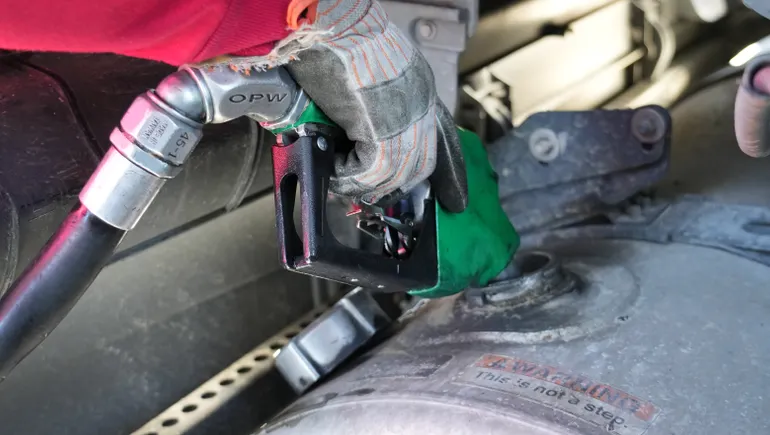
Last week, a truck driver shared on Facebook photos of the Carroll Fuel gas station near the Port of Baltimore showing diesel prices of $4.43 and $4.25 per gallon. Two other drivers responded that they had seen other stations charging $4.39.
"They lowered the tax," wrote a fourth commenter.
This month, Maryland became the first state in the U.S. to implement a 30-day fuel tax suspension. On the same day, Georgia implemented a longer suspension period of nearly three months. Republicans in Californiafailed to force a voteto suspend the state's fuel tax, but other states are still weighing similar measures amid consumer frustration over rising gas prices and overall inflation.
Some gas stations have lowered prices, but prices are influenced by multiple factors, and the government cannot mandate price cuts. Even if fuel prices drop, it may not alleviate fuel costs for cross-state truck drivers because the International Fuel Tax Agreement (IFTA)—a road use tax paid to states—remains in effect.
"I don't think these measures will help the trucking industry at all," said Lewie Pugh, executive vice president of the Owner-Operator Independent Drivers Association, referring to the tax relief measures.
"No matter where they buy fuel," Pugh said, "they still have to pay taxes to each state for the miles they travel."
"We urge states to reconsider these proposals"
The American Trucking Associations (ATA) has been lobbying against fuel tax suspensions at the federal level, citing concerns about jeopardizing funding for critical maintenance projects. The organization also opposes efforts at the state level.
"These suspensions do little to ease the burden on consumers, including trucking companies, while undermining states' ability to raise the revenue needed for important infrastructure investments," said Darrin Roth, ATA vice president of highway policy, in an email.
Roth noted that fuel excise taxes are collected at the wholesale level by gas stations, not directly from drivers at the pump.
"Whether the savings from these tax suspensions will actually be passed on to consumers is doubtful," he wrote. "We urge states to reconsider these proposals and not play politics with these important user fees."
The Georgia Department of Revenue is considering a regulation that would treat miles traveled within Georgia as tax-exempt, thereby relieving truck drivers of IFTA obligations, said Ed Crowell, president and CEO of the Georgia Trucking Association, in an interview.
"Once these regulations are in place, I expect within the next week or so you'll see some benefits to the entire trucking industry," Crowell said Tuesday.
This is the second time in the past year the state has suspended fuel tax collection, the last time being in May following the Colonial Pipeline shutdown, The Atlanta Journal-Constitutionreported. Crowell does not expect the current tax suspension to be extended "unless something really bad happens," he said.
"This is not a silver bullet for long-term problems," he said. "It's just some relief and help in the short term."
Louis Campion, president and CEO of the Maryland Trucking Association, said the industry generally welcomes any reduction in fuel costs, "which can help us mitigate the sharp increases we've experienced."
"However, recognizing that fuel taxes do support transportation infrastructure, the state needs to ensure the Transportation Trust Fund remains intact so we don't see shortfalls or reductions in Maryland-funded projects," Campion said.
State lawmakerstold The Baltimore Sunthat they will use part of a $7 million surplus to fill the $98 million impact the fuel tax suspension will have on Maryland's Transportation Trust Fund, which pays for highways, transit, and other projects.
"I'm trying to figure out how to make money"
High fuel costs play a significant role in truck drivers' decisions about where to refuel and even whether to accept loads, said Corey Pointer Sr., owner and operator of T&C Trucking.
For example, Route 68 through the mountains of western Maryland is a "roller coaster" of slopes that reduces truck fuel efficiency, which drivers call "leaving fuel on the ground," Pointer said.
"Going up and down that mountain burns a lot of fuel," said the 43-year-old Baltimore truck driver.
Pointer said lower fuel prices in Maryland and Georgia may attract drivers to refuel in those states, and he predicts other states will follow suit with fuel tax suspensions.
"It makes drivers focus on fueling up only in Maryland," he said, "and not go too far so they don't have to fuel up in another state."
But he also worries that IFTA taxes in other states will offset fuel cost savings. He said at the end of one quarter, his truck traveled in Pennsylvania but did not buy fuel there, so he owed that state $500.
"I'm trying to figure out how to make money right now," he said. "You burn through freight money quickly. And if you have drivers, you still have to pay them, and the money just isn't enough."
A 'short-sighted' political 'gimmick'?
Politicians in Maryland and Georgia have each touted their fuel tax suspension laws.
Republican Georgia Governor Brian Kemp wrote onTwitter: "We can't fix everything Washington broke, but we're doing our part to ease the impact on your wallet."
On Friday, I signed HB304 to temporarily suspend the state's fuel tax to give hardworking Georgians some relief at the pump. While we can't fix everything Washington broke, we're doing our part to ease the impact on your wallet.https://t.co/9Mr56CP6Dg
— Brian Kemp (@BrianKempGA) March 22, 2022
Maryland Comptroller Peter Franchot, a Democratic gubernatorial candidate whose agency regulates gas stations, had called for a 90-day tax suspension. Hein a campaign post on Instagramcalled the 30-day measure "Peter Franchot's fuel tax holiday."
Michael Sakata, president and CEO of the Maryland Transportation Builders & Materials Association, was the only one to testify against it.
At a joint hearing of the state Senate and House committees in Annapolis on March 15, Sakata called the effort "short-sighted."
"It fails to consider other relief proposals that could have a greater impact on more Marylanders—namely, reducing the state sales tax during the same period," he testified. "Low-income residents in our urban areas who rely on public transit—those most in need of relief—would get nothing from this bill."
In an interview, Sakata noted that the savings for the average driver are expected to be minimal: about $4 on a 12-gallon tank. He advised other states considering similar actions not to threaten funding for transportation projects for what he called a "gimmick" fuel tax suspension.
"Yes, people feel it at the pump, but they feel it everywhere, right?" he said. "They feel it on milk. They feel it on diapers they buy. They feel it on everything."