
BlackRock and Vanguard Adjust Trucking Industry Holdings at End of 2022: Convergence and Divergence in Strategies
Recent securities filings show that asset management giants BlackRock and Vanguard adjusted their holdings in several trucking industry companies at the end of 2022. The two institutions converged in their increased positions in targets such as Knight-Swift, Forward Air, and XPO, but diverged in strategy on Old Dominion Freight Line. Experts suggest that the changes may reflect operational differences between active funds and index funds rather than a clear judgment on company prospects.
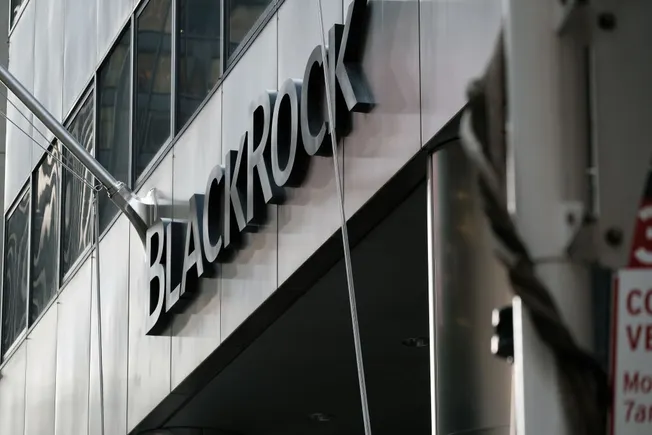
In late 2022, against a backdrop of uncertainty in the trucking market, two major institutional investors, BlackRock and Vanguard Group, adjusted their holdings in several trucking companies.
According to Transport Dive's analysis of securities filings, these two institutions, each managing trillions of dollars in assets, aligned on some investment decisions, jointly increasing stakes in companies such as Knight-Swift Transportation Holdings, Forward Air, and XPO.
However, other decisions revealed divergences in the two institutions' strategies at certain points. For example, BlackRock reduced its stake in Old Dominion Freight Line, while Vanguard increased its holding.
Analysts told Transport Dive that these differences may simply reflect investment firms rebalancing their pools of funds, and that position changes by institutions like Vanguard and BlackRock may mean little for how the relevant companies will perform in the future.
Harvard professor Lauren Cohen wrote, "Increases or decreases in institutional investor positions have not been shown to be systematic or robust predictors of future returns on the underlying securities." He added that because these positions are so large, it is difficult to judge what an overall increase or decrease might imply.
But further analysis at least reveals some of the reasons why divergences may occur. Analysts noted that differences may exist between actively managed funds and funds designed to track broader market sectors.
Convergences and divergences in BlackRock and Vanguard strategies
Across more than a dozen companies, the two institutions' moves were broadly aligned: overall, they increased their holdings in the companies.
Scott Stewart, a clinical professor at Cornell University and founder and former equity team leader of Fidelity Investments' structured investment group, carefully examined these changes and identified some reasons for the differences.
Regarding BlackRock's position in Ryder, Stewart wrote in an email, "Index fund assets did not decrease; the reduction was due to its active funds selling Ryder stock rather than its index funds." In contrast, Vanguard's broad-based funds increased their stakes in the transportation company.
Stewart wrote, "BlackRock's actively managed funds appear to be trading stocks because their views on the stocks' prospects—a combination of company trends and stock valuation—are changing."
Meanwhile, in ArcBest, both institutions increased their positions. But Stewart said BlackRock's actively managed funds bought the stock, while Vanguard's position change stemmed from purchases by its Value Index Fund, which focuses on small-cap companies. "This illustrates another reason behind index fund trading: changes in the underlying index," Stewart noted.
How investment institutions view the prospects of trucking companies
Although fund changes may involve multiple factors, analysts also offered their views on how carriers are navigating a challenging economic environment.
A BlackRock corporate communications spokesperson declined to comment on these changes, but the company's2023 Global Outlookoffers a glimpse into its strategy.
In the outlook, BlackRock wrote that macro and market volatility may require more frequent portfolio adjustments to address "economic damage," and that new investment strategies call for "pursuing more granular views by focusing on sectors, regions, and sub-asset classes rather than broad exposure."
Furthermore, BlackRock believes the problems persist. The outlook notes that despite improvement, volatile and persistent inflation may not yet be fully priced into markets. The company wrote that valuations may decline, and the coming years might present better opportunities than the present.
Vanguard, in its2023 Outlookalso expressed its own concerns and opportunities. The firm noted that its 10-year forecast for U.S. equity returns has improved compared to a year ago, current U.S. valuations are more attractive, and "a diversified portfolio across asset classes remains an effective tool for managing risk tolerance over long time horizons."
Market volatility, of course,does not catch established companies off guard. Ari Rosa, U.S. transportation research analyst at Credit Suisse, said in January, discussing broad industry trends, that savvy players in the industry are often aware of how cycles evolve.
Accordingly, companies like UPS have pointed to the potential to stand out during difficult times. Ryder CFO John Diez also noted that the market'sdemand for resilient supply chainshas increased.
For C.H. Robinson, CFO Mike Zechmeister said in a February 15 email that the third-party logistics company is well positioned, with technology that helps improve "reliability, drive efficiency, and lower cost-to-serve, making us highly competitive in any economic condition, especially during the current market cooldown."
Although companies are preparing for a challenging economic environment, according to Satish Jindel of SJ Consulting Group, volatility across the transportation industry may be less than in other sectors of the economy. He noted that spending on services far exceeds spending on goods.
"People might cut back on travel," he said, "but they still have to eat."