
Amid Freight Market Fluctuations, Why Drop and Hook Transport Remains Favored by Carriers and Shippers
Drop and hook transport maintains high demand during both boom and downturn cycles in the freight market. By reducing loading and unloading wait times to improve efficiency, this model has become an important tool for carriers to secure long-term contracts and for shippers to ensure supply chain stability in the current weak freight rate environment. The article cites data from companies such as C.H. Robinson, J.B. Hunt, and Werner, along with industry expert insights, to analyze its market logic and future trends.
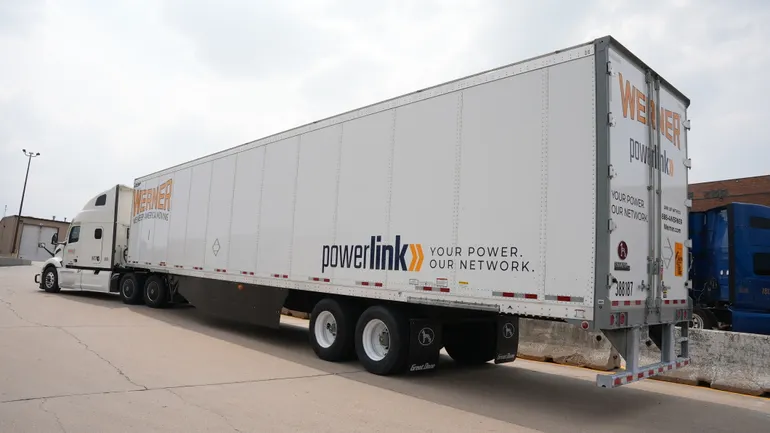
Shipper and carrier needs fluctuate with market cycles, but one service maintains strong demand: drop and hook.
In this model, a carrier drops a trailer at a loading dock and hooks another already-loaded trailer to leave, rather than waiting for live loading. Because it significantly boosts efficiency and reduces wait times, drop and hook is popular among carriers, drivers, brokers, and shippers.
"It's a service shippers need and carriers want," says Adam McDonough, vice president of North American surface transportation truckload at C.H. Robinson Worldwide.
In the current weak freight demand environment, fleets and freight brokers can use drop and hook programs to cope with low volumes and secure long-term agreements with shippers. J.B. Hunt Transport Services confirmed this in its Q4 2023 earnings: its truckload volume fell 7% year-over-year, but its 360box drop and hook program saw volume growth.
"Having a trailer pool makes the relationship stronger," notes Chris Caplice, chief scientist at DAT Freight & Analytics. He explains that unlike each bid fluctuating with rates, shippers and carriers using drop and hook must commit to a certain volume of business with each other.
"That's what carriers value most: consistency of business," Caplice says.
Trailers, More Trailers
The truckload market has been in an inverted state since Q2 2022. According to DAT data, current dry van spot rates are about $2.14 per mile, 36 cents below contract rates. But even before the market turned, drop and hook was already favored by shippers and carriers.
McDonough points out that since the electronic logging device (ELD) mandate in 2017, carriers have had to plan driver schedules and hours more carefully, making drop and hook trailers a way to increase operational predictability and save time for carriers and drivers.
David Spencer, vice president of market intelligence at Arrive Logistics, says shipper interest in drop and hook rose significantly during the pandemic, largely due to labor issues—drop and hook trailers let shippers load products flexibly when workers are available. Additionally, having available trailers reduces detention fees and lowers the risk of product damage during loading and unloading.
Many pandemic-era issues—such as inventory backlogs and trailer shortages—have eased, but shippers continue to recognize the value of drop and hook. Carriers and brokers have followed suit, building or expanding their drop and hook programs.
Landstar System's drop and hook fleet has more than 15,500 trailers. J.B. Hunt's 360box program had expanded to 16,000 trailers by the end of last year. Just over a year ago, Ryder System launched a drop and hook service, stating at the time that the platform had more than 6,000 trailers in the U.S., with "inventory growing daily."
Werner Enterprises' drop and hook network includes a pool of 30,000 trailers, "significantly more than five years ago," says Andy Damkroger, vice president of logistics at Werner. He adds that the company's shippers—many from retail or consumer packaged goods—have a "strong preference" for drop and hook.
"Having such a large trailer network is our competitive advantage," Damkroger says.
As fleets and brokers expand drop and hook programs, they are seeing real benefits. About 80% of Werner's one-way truckload business uses drop and hook.
According to McDonough, C.H. Robinson executes about 2,700 drop and hook shipments daily, and its drop and hook volume and revenue have more than tripled over the past six years.
"It's a significant part of our business," McDonough says.
Market Shift
Shippers understand that current low rates won't last forever. Market analysts expect a market correction in the near term. Caplice says DAT expects spot rates to rise above contract rates at some point this year.
Housing starts, rising auto sales, and more consumer demand could all impact the logistics market. Arrive Logistics expects the Federal Reserve to cut rates this year, "which could stimulate increased housing activity, thereby boosting overall freight demand," the company said in a recent market update.
Spencer notes that shippers who shortened contract terms are now seeking longer contracts to hedge against potential rate increases. Carriers offering drop and hook may be well-positioned to lock in long-term shipper business.
"When there are large trailer pools and large contract agreements between shippers and carriers, it's easier for shippers to maintain a solid relationship with carriers during market turbulence," Spencer says.
Experts say demand for drop and hook may not grow dramatically, but as shippers continue to prefer the model, it is likely to remain stable.
As Caplice puts it: "If shippers can use drop and hook, they will use drop and hook."