
How Much Are Yellow Corp.'s Terminal Assets Worth? It Depends on Location and Bidding Perspectives
In Yellow Corp.'s bankruptcy auction, LTL carriers such as XPO, Estes, and Saia spent billions of dollars acquiring terminals, valuing location scarcity and efficiency improvements; Old Dominion exited due to high costs. The varied strategies of each company reflect that terminal value differs based on location and bidder needs.
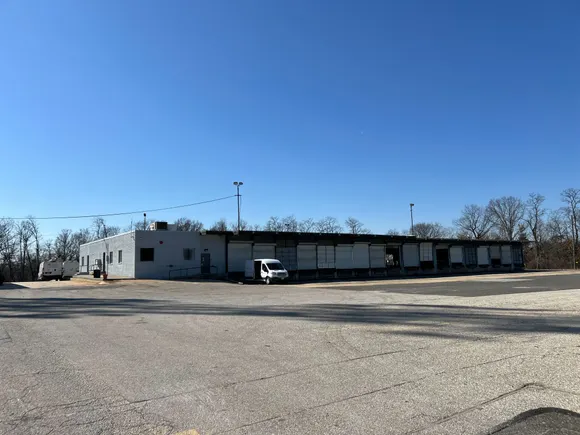
During Yellow Corp.'s bankruptcy auction last year, XPO CEO Mario Harik viewed the 28 former Yellow freight terminals the company acquired as the "crown jewels" of its network. The Greenwich, Connecticut-based company prioritized property size and the scarcity of surrounding terminals or land in the $870 million acquisition.

"The 28 terminals we acquired were actually the highest priority in the network, but each for a different reason," Harik said in an interview with Trucking Dive last week.
XPO, Estes Express Lines, and Saia each spent hundreds of millions of dollars to bring the defunct competitor's terminals into their own networks. However, not all major LTL carriers saw equal value: Old Dominion Freight Line initially submitted a $1.5 billion stalking horse bid but ultimately withdrew from the auction.
In interviews and fourth-quarter earnings calls, executives from several trucking companies discussed their strategies and the property acquisitions they valued most in what was one of the largest bankruptcy auctions in industry history.
XPO gains key facilities and efficiency advantages
According to Harik, XPO paid an average of about $300,000 per door for the more than 20 freight terminals it acquired from Yellow. In a video interview, he pulled up a map of Nashville, envisioning the company's new large terminal west of the city serving the growing population of Tennessee's capital and better supporting its distribution operations at an interstate shipping hub.
"The primary benefit we will gain is actually efficiency improvement," Harik said. "In that market, we won't need to hire new people on day one. We just need to move our existing distribution operations to the larger facility in West Nashville."
Harik also praised XPO's terminal acquisitions in Columbus, Ohio; Carlisle, Pennsylvania; and Las Vegas, assets that were highly sought after in the auction. The auction generated nearly $2 billion to repay the U.S. Treasury and Yellow's other creditors.
"They are service centers that every LTL carrier values highly," he said.
Estes positions itself at the Canadian border and beyond
Estes President and COO Webb Estes told Trucking Dive that the company strengthened its U.S.-Canada cross-border operations by acquiring facilities in Detroit; Buffalo, New York; and Burlington, Vermont, as well as a lease in Tacoma, Washington.

Of its total $285 million bid, the company paid more than $10 million each for its five most expensive sites, located in Indianapolis; Olive Branch, Mississippi; Romulus, Michigan; Charlotte, North Carolina; and Boynton Beach, Florida.
"We bought many of the strategic sites we needed," Estes said. "But we also tried to be efficient from a cost perspective. I didn't want to spend money endlessly."
Webb Estes, who has never been to Hawaii, joked that the terminal Estes acquired in Waipahu could be an opportunity for him to visit. "We are very excited about actually being on the ground there and believe that will become our differentiator," Estes said.
Saia sees it as a once-in-a-century opportunity
The approximately $250 million Saia spent on Yellow terminals represents only a quarter of its $1 billion capital expenditure budget this year, Executive Vice President and CFO Doug Col said on an earnings call.
"Saia will approach record capital investment levels in 2024, but the company has never had a similar opportunity in its 100-year history," CEO Fritz Holzgrefe told analysts.
The Johns Creek, Georgia-based company acquired 17 terminals and 11 leases in the auction, including sites in Laredo, Texas; Trenton, New Jersey; Cheyenne, Wyoming; and St. George, Utah. Holzgrefe said the facilities will open in batches throughout the year after necessary repairs.
"Some of the facilities we recently acquired... require a certain level of investment to reach the standards we expect," he said.
Knight-Swift leverages Yellow's exit to expand emerging LTL business
Knight-Swift Transportation Holdings used the opportunity to expand its LTL network launched three years ago through multiple property acquisitions. The Phoenix-based transportation giant first purchased 13 terminals, then secured two leases in Washington and Montana, and later obtained 10 additional leases from Yellow in bankruptcy proceedings.
In its initial bids, the truckload giant acquired properties across nine states at an average price of less than $4 million per terminal.
"Perfecting a super-regional network in the short term and building a national network in the long term will allow us to participate in more freight and find opportunities to further support existing truckload customers with LTL capacity," CEO and President David Jackson said on an earnings call.
ArcBest well-positioned on "the most important things"
Although its bid amount was not as high as some competitors, ArcBest Chairman, President, and CEO Judy McReynolds described the Yellow real estate auction as a "once-in-a-lifetime deal" in an interview with Trucking Dive.

The parent company of ABF Freight spent $30 million to purchase properties in Des Moines, Iowa; Columbus, Ohio; and Springdale, Arkansas, and secured a lease in Bethlehem, Pennsylvania, for $7.6 million.
"You need to make sure you are well-positioned on the most important things," McReynolds said. She stated that ArcBest's strategy in the auction was to add properties "in a reasonable way" to meet demand.
"These are long-term decisions, so you want them to be good long-term decisions," McReynolds said. "Having more options is always exciting."
Old Dominion exits auction citing costs
Old Dominion, the LTL giant headquartered in Thomasville, North Carolina, withdrew from the auction due to rising valuations, Executive Vice President and CFO Adam Satterfield said on an earnings call.
"We felt that given the cost—in hindsight, maintaining the status quo was better for us," Satterfield said. "Our network is in good shape currently, but we still control when we add to the network, where we add facilities, and how we build them," he added.