
Regulation

'A completely different world': self-driving trucks prepare for driverless operations in Texas
Self-driving trucks are moving toward a new phase of operations without safety drivers. Kodiak Robotics and Aurora Innovation plan to be the first to achieve this goal in Texas this year. A reporter experienced Kodiak's autonomous driving demonstration on-site and visited both companies' operation centers to gain in-depth understanding of their technological capabilities, safety philosophies, and concerns from the truck driver community.

Key Trends to Watch in the Trucking Industry in 2024
In 2024, trucking industry executives will focus on operating costs, technology adoption, and workforce retention while awaiting a rebound in freight demand. The industry will push for bipartisan issues such as eliminating the federal fuel excise tax, permanent truck parking funding, and freight brokerage fraud protection. Webb Estes, president of Estes Express Lines, will enter his second year with confidence in his team after navigating a cyberattack and expansion.

Freight Giants Set Sights on the 2024 Election: From 'Winning Debates' to 'Winning Orders'
At the 2023 American Trucking Associations (ATA) Management Conference and Exhibition, the 2024 presidential election became a topic as prominent as industry economic issues. New ATA Chairman Andrew Boyle urged the industry to advocate for policies with empathy, striving to 'win orders.' Association CEO Chris Spear sharply criticized unions and the Biden administration. Data shows that ATA's Truck PAC has donated over $410,000 to groups linked to bipartisan members of Congress, but has not yet backed any presidential candidate.

California diesel prices surge due to tax rate increase, putting pressure on freight operators
California diesel prices soared above $6 per gallon in September, compounded by a state fuel tax increase effective October 1, imposing severe cost pressures on small trucking businesses.
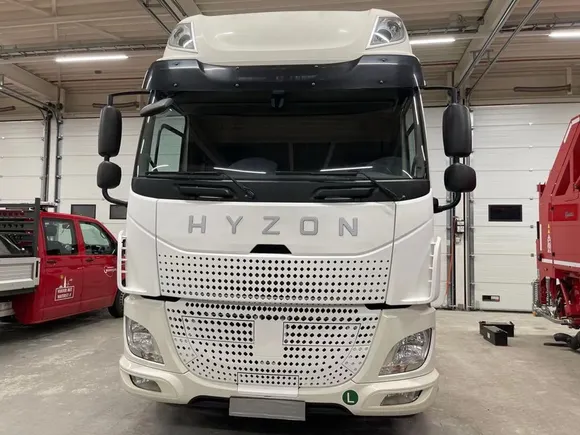
Battery Electric vs. Hydrogen Fuel Cell Trucks: 2022 Outlook
The competition between battery electric and hydrogen fuel cell trucks in the North American heavy-duty truck market has entered a new phase. Data shows that the current number of Class 8 battery electric trucks in North America is approximately 4,000 to 5,000 units, while hydrogen fuel cell trucks may number fewer than a few hundred. Although battery electric trucks dominate in short-haul and regional transport, hydrogen fuel cells still have potential in long-haul and specific operating conditions. OEMs such as Daimler, Traton, and Volvo are deploying multiple technology routes, and the industry generally believes that the future will feature a coexistence of various zero-emission technologies.

Has the FMCSA Clearinghouse narrowed the driver talent pool and exacerbated hiring challenges?
Against the backdrop of a strained U.S. supply chain, the impact of the FMCSA Drug and Alcohol Clearinghouse on the driver talent pool has sparked industry discussion. Data shows that from the compliance date of January 6, 2020, to the end of October 2021, over 100,000 violations have been reported, with more than 75,000 drivers in a prohibited work status. Industry insiders point out that while this system removes unsafe drivers, it also brings new challenges such as slower hiring processes and complex return-to-duty procedures.

Sleep Apnea: The 'Silent Killer' Lurking Among Long-Haul Truck Drivers
Obstructive sleep apnea (OSA) is highly prevalent and often overlooked among long-haul freight drivers, endangering not only their health but also increasing accident risks. This article examines screening barriers, treatment costs, and industry responses from the perspectives of drivers, experts, and companies.

Fuel tax has long been ineffective, and the pandemic may be the last straw that breaks it
Under the impact of the pandemic, driving in the U.S. has dropped sharply, fuel tax revenue has decreased significantly, and state transportation budgets are in trouble. This crisis has exacerbated the long-term unsustainability of the fuel tax, prompting policymakers to reconsider alternatives such as mileage-based fees.

COVID-19 Pandemic Casts Shadow over Trucking Industry's 2020 Outlook
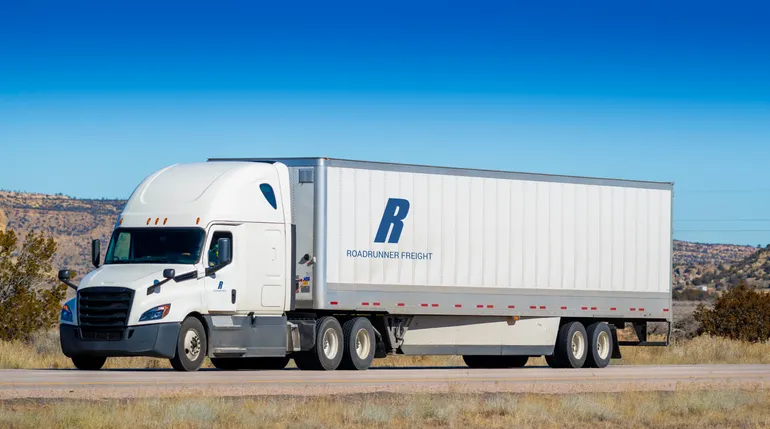
At the start of 2020, the trucking industry anticipated improvement over 2019, but from late February onward, the global spread of the COVID-19 pandemic disrupted these expectations. FTR data shows that North American Class 8 truck orders in February fell 20% month-over-month, marking the lowest level for that period since 2010. Several industry experts and analysts stated that pandemic-related uncertainty has made full-year forecasting difficult, but tighter capacity could push freight rates higher. Meanwhile, long-term issues such as driver shortages and infrastructure funding continue to persist.