
Battery Electric vs. Hydrogen Fuel Cell Trucks: 2022 Outlook
The competition between battery electric and hydrogen fuel cell trucks in the North American heavy-duty truck market has entered a new phase. Data shows that the current number of Class 8 battery electric trucks in North America is approximately 4,000 to 5,000 units, while hydrogen fuel cell trucks may number fewer than a few hundred. Although battery electric trucks dominate in short-haul and regional transport, hydrogen fuel cells still have potential in long-haul and specific operating conditions. OEMs such as Daimler, Traton, and Volvo are deploying multiple technology routes, and the industry generally believes that the future will feature a coexistence of various zero-emission technologies.
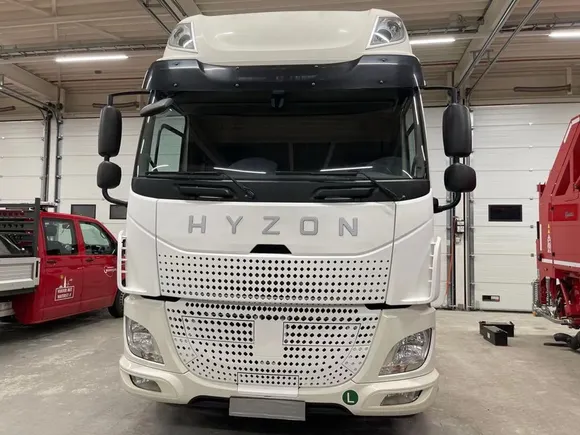
Within the trucking industry, a battle comparable to Godzilla versus Kong, or Superman versus the underdog Batman, is brewing. However, this fight may struggle to attract audiences beyond physics enthusiasts and transportation officials, because the core issue is: which type of truck will replace diesel-powered Class 8 heavy trucks? Battery electric vehicles (BEVs), or fuel cell electric trucks (FCEVs) that use hydrogen?
As fleets look toward a zero-emission future, the clash between BEVs and FCEVs is quietly unfolding behind the scenes and at industry conferences. For original equipment manufacturers (OEMs), the key lies in winning the favor and orders of large, well-capitalized fleets—which are likely to be the first customers in North America to order zero-emission vehicles.
The answer to the metaphor for this battle depends on the respondent, and possibly on the energy type they support. But one thing seemed clear in early 2022: battery electric is temporarily ahead, but by no means a sure winner.
The elusive "hydrogen highway"
For industry insiders, this is a familiar debate, and industry leadership has reversed before. In the 2000s, former President George W. Bush and former California Governor Arnold Schwarzenegger embraced hydrogen and talked about a future "hydrogen highway."
In 2004, Schwarzenegger signed an executive order planning to build a hydrogen highway by 2010—a network of hydrogen refueling stations along major routes—when the governor hoped to build 200 stations. But those highways never materialized.
Chris Nelder, host of the "Energy Transition Show" and an electric truck advocate, said the market did not see the long-term benefits or viability of hydrogen fuel cells, even for passenger vehicles. Meanwhile, BEV advocates continued to push forward despite competition from cheap gasoline and other green transportation options, including hybrids and natural gas.
"Electric vehicles completely took over the market." — Chris Nelder, host of the "Energy Transition Show"
Then Tesla arrived with its sleek and popular electric cars, coveted by celebrities. Tesla used its momentum to develop the Semi—a Class 8 model whose production has been repeatedly delayed. Now, the newly signed federal Infrastructure Investment and Jobs Act (the bipartisan infrastructure law) includes $7.5 billion to build an electric vehicle charging network. President Joe Biden's goal is to create 500,000 charging stations for battery-electric cars and trucks.
"Electric vehicles completely took over the market," Nelder said, "because electricity is everywhere."
Usage data also shows the advantage of electric. Tim Denoyer, vice president at ACT Research, said that while it is difficult to precisely count the number of battery-electric and hydrogen fuel cell trucks operating in North America, he estimates Class 8 BEVs at between 4,000 and 5,000. As for fuel cell trucks, "I would be surprised if there are a few hundred," Denoyer said.
Nelder believes the trend is already clear. He sees Daimler Trucks adopting battery electric, while many private fleets like PepsiCo and Amazon are turning to lighter battery-electric trucks for delivery. Nelder said hydrogen could lose across the board, even in the Class 8 segment.
OEMs also indicate the tide is turning. At the ACT Expo in spring 2019, then-CEO of Daimler Trucks Roger Nielsen said in a keynote that the largest U.S. truck manufacturer would focus on battery-electric trucks. Then, in April 2021, Traton announced that the future of heavy trucks is battery electric.
"Hydrogen trucks... will gradually lose to increasingly practical electric trucks, for a simple reason: they have lower operating costs," wrote Traton's Matthias Gründler and Andreas Kammel. The two executives also noted that even if hydrogen prices fall, electric trucks will maintain a sustained advantage. "Trucks are capital goods with high usage intensity, and their fuel costs are much higher than acquisition costs," Gründler and Kammel wrote. "The more an electric truck is used, the greater its energy cost advantage. Thus, the common notion that hydrogen trucks are for long-haul and electric trucks only for short-haul begins to crumble."
Of course, electric trucks also face their own challenges. On January 12, the North American Council for Freight Efficiency and the Rocky Mountain Institute released a study on electric truck usage, summarizing what they believe is needed to charge Class 3, 4, and 5 vans and step vans, Class 6 box trucks, Class 8 yard tractors, and Class 8 regional haul tractors in Canada and the U.S. The study shows these vehicles, totaling about 5.2 million, would require 168,582 gigawatt-hours of electricity annually. But in return, more than 100 million metric tons of carbon emissions could be avoided.
Let the best use cases win
Different heavy-truck applications provide opportunities for both electric and hydrogen trucks to occupy the best use cases. Long-haul transportation is currently not ideal for battery-electric trucks, and fuel cell electric truck manufacturers are eyeing these routes. Currently, the shorter the operating distance, the better battery-electric trucks perform.
Hyzon Chief Strategy Officer Parker Meeks said truck buyers have three main goals when evaluating zero-emission trucks: the truck design itself, service and replacement costs, and fuel availability. "Frankly, it all comes down to fuel," Meeks said.
When fleets consider zero-emission vehicles, they first evaluate the capabilities of these heavy vehicles in five major applications. But Mike Roeth, executive director of the North American Council for Freight Efficiency, said many fleet managers go beyond these five applications to think about whether BEVs will outperform FCEVs, resulting in a clear industry winner. Roeth said at a meeting with fleet executives that they want to know who will win the sales supremacy battle. "We like cage fights, right?" Roeth said, "It's a hot topic."
For fleets, the strategy for adopting BEVs and FCEVs in the Class 8 segment leans toward slow and steady. Electric seems to have an advantage, especially in short-haul fleets like less-than-truckload (LTL) and last-mile operations. XPO Logistics is testing several electric Class 8 trucks manufactured by Daimler Trucks at a facility in Hayward, California. According to Joseph Checkler, vice president of public relations and social media at XPO, its pilot projects in France and Spain—where local governments are more aggressively promoting green energy—are progressing slightly faster. "There are many opportunities for electric truck use, but before reaching critical scale, the industry still faces technical and economic barriers," Checkler said.
But XPO's LTL competitor Saia has decided its BEV purchases will reach triple digits. On January 6, Saia signed a letter of intent to purchase or lease up to 100 Class 8 electric trucks from Nikola. Saia officials said the agreement was reached after successful demonstrations. Deliveries will occur between 2022 and 2024, with the first 25 trucks possibly arriving in 2022.
OEMs prepare for a mixed future
Fuel cell companies believe the zero-emission future will be a mix of multiple technologies, where hydrogen must have a place because BEVs have issues with range and charging time. Meeks believes one application where hydrogen could gain ground is garbage collection. Although many municipalities, including New York City, are testing electric garbage trucks, "most municipalities don't really want to try a second one," Meeks said. The frequent start-stop and load collection of garbage collection put stress on batteries, Meeks said.
The long-haul Class 8 market is also attractive to Hyzon. Meeks said its fuel cell prototype has a range of 375 miles, which could increase to 400 miles in the future, a reassuring number for fleets with range anxiety. Unlike electricity, the hydrogen network has not yet been built. Therefore, Hyzon plans to develop and distribute hydrogen with partners. On November 10, Hyzon and TC Energy announced they had reached an agreement on the development, construction, operation, and ownership of hydrogen production facilities in North America, which Hyzon calls "hubs."
But even as Hyzon tries to build a network and bring hydrogen costs down to parity with diesel—which it believes it can do with federal subsidies—it acknowledges that certain areas of trucking will be dominated by battery electric. Meeks said Hyzon will focus on buses, Class 8, and some high-intensity Class 6 applications. Some OEMs are targeting all new areas. Brett Pope, director of electric sales for Volvo Trucks North America, said the company is preparing multiple zero-emission options, starting with battery electric. "Since no single solution fits all customers, Volvo Trucks offers different solutions," Pope said in an email, adding that the company already produces natural gas and BEV models and is developing FCEVs.
Similar to Traton and Volvo, Roeth believes the future will be a mix of multiple zero-emission options, even if battery electric takes the largest share. "It's 'and,' not 'or,'" Roeth said, "We are confident both will exist."


