
ATRI Annual Report: I-294 and I-290/I-88 Interchange in Chicago's Western Suburbs Named Worst Truck Congestion Bottleneck in the U.S.
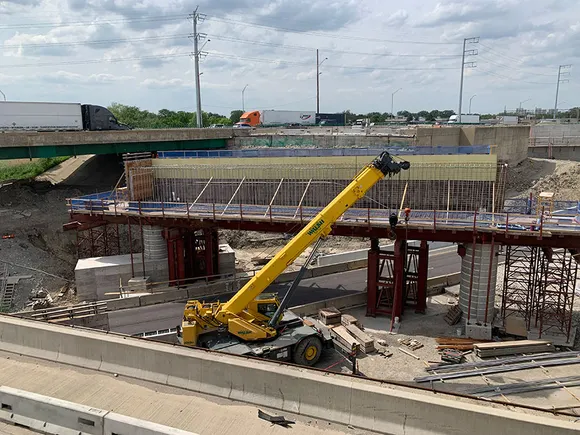
The American Transportation Research Institute (ATRI) released its 2026 annual report on the top 100 truck bottlenecks in the U.S., with the I-294 and I-290/I-88 interchange in Chicago's western suburbs ranking first for the first time. This interchange handles over 300,000 vehicles daily and is currently in the midst of a six-year, $800 million reconstruction project, slated for completion by the end of 2027. The report also shows that the average speed of trucks during peak hours nationwide decreased by 2.8% compared to the previous year, and traffic congestion adds $109 billion annually to consumer goods costs.
Key Takeaways
- According to the American Transportation Research Institute (ATRI)annual report, the interchange of I-294 with I-290/I-88 in Chicago's western suburbs has been ranked as the worst truck congestion bottleneck in the nation.
- According to the Illinois Tollway, the interchange sees over 300,000 vehicles daily and is currently in the sixth year of amajor reconstruction project, which is expected to be completed by the end of 2027. Once completed, the $800 million project is expected to ease congestion and improve roadsafety.
- ATRI noted that road construction is one of the factors contributing to traffic congestion. Chris Spear, President and CEO of the American Trucking Associations (ATA), said ina statementthat those least surprised by the rise in ranking of this Chicago-area expressway are "the truck drivers and commuters who endure endless delays at this terrible interchange."
Top 10 Truck Congestion Bottlenecks in the U.S.
| Highway Interchange | City and State | Average Speed (mph) |
|---|---|---|
| 1. I-294 at I-290/I-88 | Chicago, Illinois | 39.5 |
| 2. I-95 at Route 4, New Jersey | Fort Lee, New Jersey | 28.2 |
| 3. I-285 at I-85 (North) | Atlanta, Georgia | 35 |
| 4. I-45 at I-69/US 59 | Houston, Texas | 29.2 |
| 5. I-75 at I-285 (North) | Atlanta, Georgia | 39.1 |
| 6. I-20 at I-285 (West) | Atlanta, Georgia | 40.4 |
| 7. I-24/I-40 at I-440 (East) | Nashville, Tennessee | 36.8 |
| 8. I-10 at I-69/US 59 | Houston, Texas | 34.3 |
| 9. I-71 at I-75 | Cincinnati, Ohio | 42.5 |
| 10. I-75 | McDonough, Georgia | 46.2 |
Data source:ATRI
In-Depth Analysis
ATRI has been studying the most congested freight areas in the U.S. for nearly 25 years. The institute analyzes truck GPS data to support the U.S. Department of Transportation's Freight Mobility Initiative. The study covers congestion conditions in more than 325 areas nationwide, assessing freight travel speeds and volumes at these locations.
According to ATRI, theresearch findingshave been cited by public and private sector stakeholders to guide infrastructure investments aimed at reducing obstacles that impact supply chains.
The latest report concludes that traffic conditions across the country continue to deteriorate. The average truck speed during peak hours is33.2 mph, down 2.8% from the previous year. At the top ten bottleneck locations, the average truck speed during peak hours is only 29.6 mph.
ATRI's research shows that traffic congestion adds $109 billion in costs to consumer goods each year and also affects the quality of life for motorists.
Although the Chicago area took the top spot on this year's list, the Atlanta metropolitan area claimed four of the top ten spots. Last year's most congested bottleneck in the nation—I-95 at Route 4 in Fort Lee, New Jersey—dropped to second place this year.
Spear said that some problem bottleneck areas have been addressed over the years. He specifically mentioned the $2 billionGeorge Washington Bridge project, where some completed improvements have improved traffic flow between New York and New Jersey.
"This success story provides a roadmap for policymakers, guiding them to invest in projects that improve the efficiency of the entire transportation system and benefit constituents," Spear said.