
California Says FMCSA Intervention on Non-Resident CDLs Hinders Court Relief
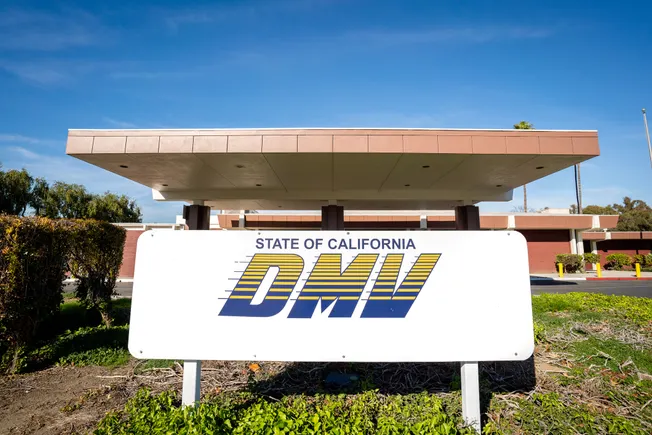
The California Department of Motor Vehicles (DMV) issued a statement saying that despite an Alameda Superior Court ruling on March 2 allowing affected drivers to immediately apply for new licenses, the FMCSA's mandatory 'suspension' still prevents the state from issuing non-resident commercial driver's licenses (CDLs), causing applications from approximately 13,000 drivers to be delayed for up to one year.
Core Summary
- California DMV says a group of commercial drivers in the state, potentially 13,000 or more, cannot obtain new non-domiciled commercial driver's licenses (CDLs) because the Federal Motor Carrier Safety Administration (FMCSA) is blocking the state from moving forward with the process.
- These drivers won a legal victory on March 2 in Alameda Superior Court. In that order, Judge Karin Schwartz noted that under state law, affected drivers whose licenses were canceled have the right to immediately apply for new licenses.
- The state DMV emphasized: "Although the court ruling means the DMV must accept non-domiciled CDL applications, the department cannot issue non-domiciled CDLs until FMCSA lifts its mandatory 'pause.' All applications will be held for up to one year until the DMV determines it can process them." The relevant text is highlighted in bold.
In-Depth Analysis
FMCSA's audit efforts are creating tensions with states. The federal government claims it may withhold related federal funds because of issues in states' issuance and renewal of non-domiciled CDLs.
Meanwhile, the federal government is also seeking stricter requirements for issuing non-domiciled CDLs. California DMV notes that individuals holding certain visas, refugees, and asylum seekers are classified as non-domiciled residents.
In California, the Superior Court judge in this case downplayed FMCSA's role in this legal dispute. The core of the dispute is what obligations California has in renewing or reissuing non-domiciled CDLs.
Joining this class action is Jakara Movement, an advocacy organization that speaks for working-class Punjabi Sikhs. The organization previously stated that the state deprived drivers of their livelihoods without giving them the opportunity to obtain appropriate relief.
The organization said: "These actions are a mass termination of livelihoods based on the state's own errors, carried out without hearings, without appeals, and without any legal avenue for drivers to correct their records."
The state DMV says that after a federal audit found compliance gaps, FMCSA required California to pause the issuance of non-domiciled CDLs and commercial learner's permits. FMCSA threatened to withhold $158 million in federal funds from the next federal budget year starting in October if the issue was not resolved. However, California can still retain the funds by resolving the issue.
Judge Schwartz noted that the issue arose from FMCSA's discovery last year that some non-domiciled CDLs in California had expiration dates later than the validity of the drivers' legal residency documents.
For trucking companies, this outcome puts pressure on driver supply and carrier operations. Federal officials say the matter is about safety—related to truck crash issues involving certain groups of drivers.