
The fuel tax dilemma has long existed, and the pandemic may become a catalyst for change
The COVID-19 pandemic has led to a sharp decline in driving and a sharp drop in fuel tax revenue, further exposing the long-standing structural flaws in the U.S. fuel tax system. State transportation departments face budget shortfalls of billions of dollars and are forced to cut projects. Although Congress has temporarily avoided reform with a one-year extension, alternatives such as vehicle miles traveled (VMT) fees are gaining more attention.
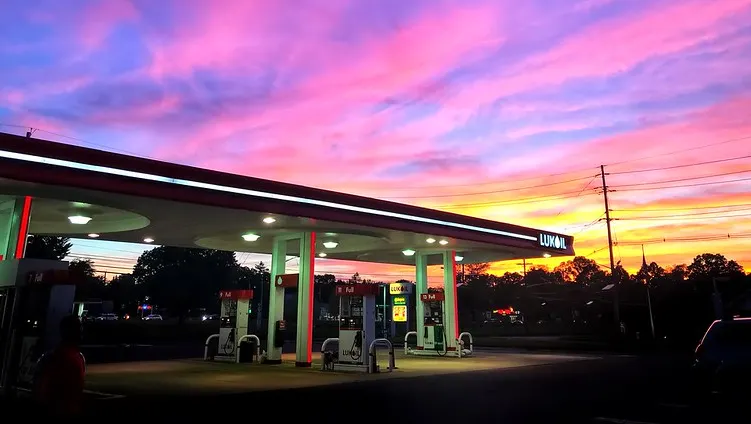
After months of travel and work restrictions caused by the COVID-19 pandemic, drivers returning to the wheel may find that road conditions are not what they used to be.
At the onset of lockdownsdriving dropped sharply, reducing fuel tax revenue for state and local governments and exposing a problem that many transportation agencies and lawmakers have worried about for years: fuel taxes are no longer sufficient to fund U.S. infrastructure.
Budget problems existed long before the pandemic, but new driving trends could accelerate discussions about innovative ways to replace fuel taxes.
"We have always believed that the current model is unsustainable in the long run. The pandemic has only exacerbated these issues," said Susan Howard, director of highway finance at the American Association of State Highway and Transportation Officials (AASHTO). "We all agree on the 'user pays' principle, where the amount paid is based on miles driven... but the pandemic has certainly highlighted some weaknesses in this approach."
Infrastructure funding woes
Facing budget shortfalls, state and local governments are making difficult choices about how to address infrastructure issues, with some considering cutting maintenance or suspending capital projects aimed at improving road access.
For example, Maryland has proposedcutting $3 billionfrom its six-year consolidated transportation plan budget, including delaying about $900 million in road projects and reducing some bus and rail services.
Meanwhile, areportfrom the California Legislative Analyst's Office predicts that the state's revenue for fiscal year 2020-2021 will be $1.2 billion lower than the initially projected $12.8 billion, mainly affecting transit projects and shared revenue for local streets and roads.
New Jersey even had toraise its fuel taxby more than 9 cents per gallon this fall, as required by a 2016 law that automatically triggers a tax increase when state revenue falls short.
Nationwide, the American Association of State Highway and Transportation Officialspredictsthat state transportation departments will face a $37 billion deficit over the next five fiscal years and is calling on Congress to fill the gap in future COVID-19 relief bills.
Because states have different revenue structures and formulas for sharing funds with local governments, cities are affected differently. Public transit agencies face particularly severe challenges: the American Public Transportation Association says that without federal aid, 60% of the nation's transit systems would have to reduce service and furlough employees. A June survey by the National League of Citiesfoundthat 65% of cities are delaying or canceling capital expenditures and infrastructure projects.
Overall, transportation departments are now more likely to focus on basic tasks like filling potholes and plowing snow—as well as restoring ridership—rather than more innovative long-term projects.
Empty streets lead to empty treasuries
The most obvious sign of the early pandemic lockdowns was empty streets. Closed offices meant no commuters, deserted downtowns reduced suburban traffic, and travel restrictions halted leisure trips within cities.
According to the Federal Highway Administration, vehicle miles traveled (VMT) in March fell nearly 19% compared to March 2019, and in April the year-over-year decline was close to 40%. Summer driving picked up somewhat, with a cumulative decline of about 15% through August.
Less driving means fewer people filling up at the pump, and fuel tax revenue has fallen accordingly. Even as driving recovers, the Highway Trust Fund'srevenueis still about 10% lower than the same period last year. More than 80% of the fund comes from fuel taxes, but it also includes tire and heavy vehicle taxes. State transportation departments have their own revenue sources, including state fuel taxes that are higher than the federal level, but they still rely on funding from Washington.
After economic recessions, VMT tends to recover slowly because people are slower to return to work or resume leisure travel. Federal data show that VMT declined during the 2008 recession and did not recover until 2015. States have already faced years of potential losses due to suspended or reduced long-term projects.
Alexis Campbell, a spokesperson for the Pennsylvania Department of Transportation, said the state withdrew bid advertisements for 19 projects and canceled seven announced projects. Campbell said losses are expected to reach up to $550 million by the end of the fiscal year.
"Our funding challenges are not new, and the COVID-19 pandemic has highlighted the fact that fuel taxes are insufficient to meet highway and bridge needs," Campbell said. "We have made significant progress in improving our transportation system, but more investment is needed to address funding challenges, rising costs, and other financial impacts."
The slowdown in VMT also underscores the importance of diversifying revenue sources. For example, the Oregon Department of Transportationannouncedexpected revenue losses of about $170 million in 2020 and 2021, with cumulative losses projected to reach $250 million by 2024 compared to October 2019 forecasts. The department is funded by state and federal fuel taxes, DMV fees, and weight-distance truck taxes.
Travis Brouwer, assistant director of revenue, finance, and compliance for the department, said that last source has remained stable, helping the state avoid larger deficits.
"Truck taxes account for about 35% of our budget, much higher than other states with similar requirements," Brouwer said. "Our revenue sources are like a three-legged stool, and having that support makes the budget more stable. The other two legs are a bit wobbly right now."
Can Congress find a new path?
Even before COVID-19, transportation funding has been on shaky ground for over a decade. As vehicle fuel efficiency improves and electric vehicles become more common, the federal fuel tax'seffectivenesshas been declining. Since 2008, Congress has been forced to fill gaps in the Highway Trust Fund through transfers from the Treasury. Congress has also not raised the tax since 1993, and it is not indexed to inflation.
Even before the pandemic, the Congressional Budget Officepredictsprojected that the federal Highway Trust Fund would run out of cash in 2021. Congress had planned to advance a long-term transportation reauthorization bill this year, but lawmakers ultimately passed aone-year extension, avoiding the funding debate.
Now, the reauthorization debate will take place against the backdrop of states cutting projects and scrambling for funds, which could put more pressure on Congress to seriously consider alternatives to fuel taxes. The most frequently discussed idea is avehicle miles traveled (VMT) fee, which would charge drivers based on miles driven.
"The fuel tax is a relatively stable source, which is powerful, but as we move away from fossil fuels, its purchasing power is declining," said Adie Tomer, a fellow at the Brookings Institution's Metropolitan Policy Program. "A VMT fee is more like a utility charge, similar to how we pay for water or electricity. It sends a price signal to users."
The American Trucking Associations supports fuel taxes and warns the government against implementing policies targeting the trucking industry to raise funds. The organization is particularlyopposed to a VMT tax that applies only to trucks。
Alternatives face technical hurdles in tracking and charging drivers, but a few states are already piloting their own programs. For example, Oregon has a voluntary VMT pilot program that is growing, but Brouwer had no data on the impact of lockdowns. Meanwhile, Washington state is actively exploring road usage charges. Aninterstate coalitionalong the I-95 corridor is also considering implementing its own user fee.
"The conversation about long-term funding needs to happen at all levels of government as well as in the private sector," said Brooks Rainwater, director of the Center for City Solutions at the National League of Cities. "We need to see more collaboration between levels to get there. Now that we have seen the consequences of relying on a few sources, it is time to look at the best mix of funding."
Of course, VMT and congestion pricing schemes depend on normal driving habits, which may change after the pandemic as more companies allow remote work.
In a recent Bloomberg Intelligence webinar, tax policy analyst Andrew Silverman noted that the next administration and Congress may need tolook beyond taxes—which could disproportionately affect low- and middle-income drivers—to meet the nation's infrastructure needs. This could include bonds and public-private partnerships, combined with taxes and tolls.
There have even been proposals to use a carbon tax to fund the transition away from single-occupancy vehicle use. The 12 northeastern and mid-Atlantic states participating in theTransportation and Climate Initiativeare exploring a "cap-and-invest" program to support funding for public transit, zero-emission vehicles, and bicycle and pedestrian infrastructure.
Howard said that when lawmakers return to work on transportation bills, they should consider the lessons of the pandemic and look to more innovative states and cities for new funding strategies.
"A program so dependent on gasoline purchases creates challenges for forecasting when events like this occur," Howard said. "Long-term forecasts assume a certain level of sustained use, and the long-term picture is changing. The whole situation continues to reveal how we are falling short in modernization."