
Shippers Avoid High-Priced Spot Market, Contract Freight Business Booms
Against the backdrop of high spot rates and tight capacity, shippers are accelerating their shift to contract carriage (dedicated carriage), while carriers actively adjust routes to meet demand. Werner has 66% of its fleet dedicated to contract freight, and an FTR vice president notes this trend is nationwide. Beyond cost factors, shippers also seek to secure long-term capacity, with contracts typically spanning three to five years. Meanwhile, e-commerce and retail demand for stable inventory further drives this trend. However, building a private fleet is not easy—equipment maintenance is complex and there is a driver shortage—so many retailers still choose to partner with carriers. Companies like U.S. Xpress and Penske Logistics are helping shippers achieve control and flexibility through contract carriage services.
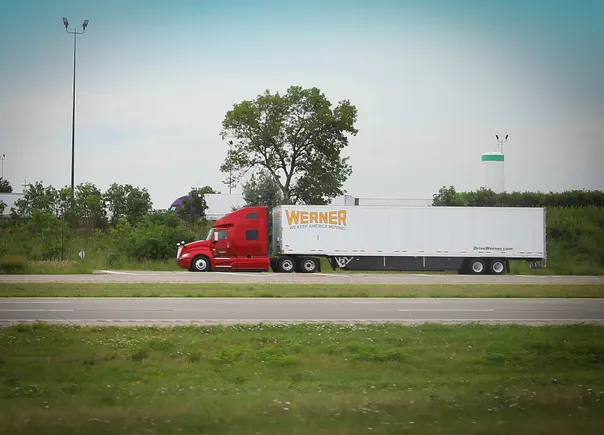
Against the backdrop of persistently high spot rates and difficulties in securing capacity for some cargo, shippers are increasingly turning to dedicated carriage agreements with carriers, who are correspondingly adjusting their route networks to meet this shift in demand.
According to Craig Callahan, Chief Commercial Officer and Executive Vice President at Werner, 66% of the company's fleet is currently deployed in dedicated carriage, and this proportion "continues to grow."
Avery Vise, Vice President of Freight at FTR, stated that nationwide, dedicated carriage has not shown specific regional hotspots, but rather "wherever spot rates rise, dedicated carriage thrives there." Vise explained, "This phenomenon is quite widespread because the spot market has a broad reach, and shippers are trying to bypass it."
Rising spot rates push shippers toward dedicated carriage
However, high spot prices are not the only driver for shippers to sign dedicated carriage agreements. During periods of tight capacity, shippers also want to ensure stable capacity. According to Justin Harness, President of the Dedicated Division at U.S. Xpress, dedicated carriage agreements typically last three or five years.
Vise noted that over the past decade, the market has gradually shifted toward dedicated carriage routes, partly due to carriers' experiences with overcapacity during and after the Great Recession. Carriers aim to achieve greater stability in an unstable driver market. The demand for inventory continuity from e-commerce and retail has further reinforced this trend.
Shippers have felt multiple pressures from ports, the spot market, and inventory reductions. Although spot rates occasionally dip to low levels, shippers value certainty more.
Scaled application of dedicated carriage
When shippers consider building their own fleets, dedicated carriage often becomes an important topic of discussion. Dollar General has had such discussions with its carriers, including its largest carrier, Werner.
In April this year, Dollar General announced plans tohire up to 20,000 people, includingdrivers for its private fleet. By the end of 2017, the retailer had only 80 tractors; by last spring, its tractor count had exceeded 700, with more than 550 drivers.
Dollar General currently operates approximately 17,000 stores and plans to double that number in the long term. However, due to factors such as store size and inventory space, the company cannot rely entirely on dedicated carriage.


Other retailers also use third-party dedicated carriage services while maintaining their private fleets; Walmart is one such example.
But building a private fleet is not easy. Equipment and maintenance are increasingly complex, and many retailers with private fleets typically have strong capital to handle such challenges. Callahan said, "Easier said than done."
Moreover, the driver shortage remains severe. The COVID-19 pandemic delayed driver training and licensing processes. Retailers and shippers looking to build their own fleets will face greater challenges competing with carriers for drivers.
Transitioning from private fleet to dedicated carriage
When customers approach U.S. Xpress about building their own fleets, they typically receive a brief introduction to the trucking business. In short, Harness and U.S. Xpress will convince retailers or shippers that transportation is not their core business.
Harness pointed out that some customers do not fully consider the potential problems of building their own fleets; other companies choose to hand over their existing fleets and operations to U.S. Xpress, stepping away from self-operated transportation while retaining their routes. Harness said, "We certainly welcome such opportunities."
The next task is to prove reliability to shippers and retailers. Harness believes that dedicated carriage agreements can provide this reliability better than third-party logistics (3PL). Penske Logistics even displays a chart on its website showing shippers the concept of the "control curve."

Penske states: "Dedicated carriage is tailored for shippers who wish to outsource fleet operations and maintenance. They avoid the day-to-day management of vehicles while still having capacity at their disposal."
According to Dave Heller, Vice President of Government Affairs at the Truckload Carriers Association, shippers are seeing the benefits of this control and are increasingly turning to the dedicated carriage model.
Vise believes this is not just a result of carriers actively marketing dedicated routes. Shippers genuinely need this service, and carriers are happy to provide it because dedicated carriage offers higher profit margins compared to non-contract truckload transportation.
One drawback of dedicated carriage is that if most vehicles are locked into specific routes, carriers will find it difficult to flexibly respond to temporary demand in hotspot markets. Vise noted that the trucking industry has experienced ups and downs over the past four years, and the new uncertainties brought by the pandemic and consumer recovery are prompting all parties to shift toward the dedicated carriage model.
Driver preferences drive the trend
Werner's dedicated carriage share (66%) reflects the shift in shipper demand and aligns with the situation at other truckload carriers. In May this year,Roehl Transport statedthat thanks to its dedicated carriage strategy, 60% of its drivers can be home by the weekend.
Companies like Roehl Transport use this as a recruiting selling point to attract drivers who want more stable routes, more reliable mileage pay, and more home time.
"Happy drivers lead to happy deliveries."

Justin Harness
President of the Dedicated Division at U.S. Xpress
Callahan said that because efficient dedicated routes typically do not exceed 250 miles, thousands of Werner drivers can return home daily or weekly.
Harness also believes drivers are an important factor driving the dedicated carriage trend. Dedicated drivers can gradually become familiar with fixed routes or customers, which aids recruitment. Harness concluded, "Happy drivers lead to happy deliveries."