
California diesel prices surge due to tax rate increase, putting pressure on interstate truck operators
California diesel prices rose sharply in September due to a tax rate increase, with average prices exceeding $6 per gallon. Interstate truck operators face higher quarterly IFTA taxes, while refinery transitions reduce supply, further driving up costs.
In September, sluggish spot freight rates and high diesel prices forced Khalid Masri, owner of trucking company KM Global Trans based in Pomona, California, to take two of his four trucks out of service. Masri has 27 years of driving experience in the industry, has operated as an owner-operator since 2000, and has owned four trucks since 2016, handling freight across the 48 contiguous states. However, this is the first time he has had to idle half of his business.
"Even outside California, fuel prices are still high," he said.
California diesel prices surged in 2022 and 2023
Highway diesel prices on the U.S. West Coast have risen sharply in recent months, especially in California. The state's average price exceeded $6 per gallon last month and continued to climb in the most recent weekly report before easing back to an average of $6.18 per gallon.
Interstate trucking operators face higher tax burdens
Truck drivers pay fuel taxes in several ways. Pump prices reflect a portion of the cost, but interstate drivers also pay a quarterly tax that helps states and Canadian provinces maintain infrastructure. This quarterly fee falls under the International Fuel Tax Agreement (IFTA), which allows U.S. states and Canadian provinces to collect transportation infrastructure funds based on where truckers consume fuel, not where they purchase it. Typically, the rate is adjusted once a year, but California operators have experienced multiple increases over the past year.
On October 1, California's combined rate rose from 89.3 cents per gallonto nearly $1.09, which adds to the state'sincreases on July 1 and on the same date last year. Taxes are paid quarterly, and interstate carriers must calculate amounts owed to each state and province. Joe Rajkovacz, director of government affairs and communications for the Western States Trucking Association, said some members can no longer afford the fee.
Although other taxes are paid annually, quarterly bills accumulate. Masri said he pays thousands of dollars in IFTA taxes every three months. California's rate is the highest in the nation, and these taxes do not include other fees, such as the federal diesel excise tax of 24.3 cents per gallon. Among other regions with the highest IFTA rates, Pennsylvania'srate is 78.5 cents per gallon, and Illinois is 78.8 cents per gallon.
California uses this revenue to build and maintain public roads and transit systems. The California Department of Tax and Fee Administration currently oversees these adjustments, and according to the department, rate increases are based on percentage changes in the Consumer Price Index.
Refinery output drops to low levels amid strategic transition
Even without considering interstate taxes, California diesel prices are significantly higher than in other states, said Avery Vise, vice president of trucking at FTR. The West Coast average excluding California has exceeded $5 per gallon, but the next highest regions, the Mid-Atlantic and Rocky Mountains, are both around $4.72. "That's a huge gap," Vise said.
The California Energy Commission noted that fuel supply-demand imbalances help explain regional price differences. "Like gasoline, California diesel prices tend to diverge from national trends," the agency said in an email to Trucking Dive. "This is partly because California is an island for transportation fuel, with no pipeline infrastructure to bring fuel from other states."
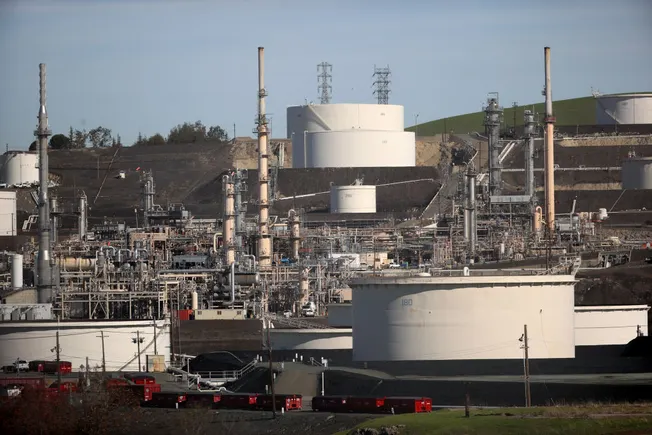
Over the past year, supply issues have persisted in California as regulators push consumers and businesses away from fossil fuels, aiming for carbon neutrality by 2045. As part of these efforts, the state is promoting the conversion of oil facilities to alternative energy sources. In early 2023, Phillips 66 ceased operations at its Santa Maria refinery and worked to convert its Rodeo facility at its San Francisco refinery to renewable fuels.
"With that facility coming online, the reduction in our traditional diesel production is almost equal to the increase in renewable diesel production," CEO Mark Lashier told investors on an August 2earnings call. The updated facility, named Rodeo Renewed, is planned to begin operations in early 2024, converting crude oil processing to waste oils, fats, greases, and vegetable oils to produce renewable diesel, renewable gasoline, and more sustainable aviation fuel.
Similarly, Marathon Petroleum is converting its Martinez refinery in the San Francisco Bay Area. CEO Mike Hennigan said on an August 1earnings callthat the facility is expected to reach full capacity by the end of 2023, producing 730 million gallons of renewable fuel annually. Amid these changes, California-grade diesel production has hit a 15-year low this year, according tostate data, with weekly production below 1 million barrels in July and some other weeks.
For some trucking operators, fuel costs have become a tipping point in an already tough market. Masri expects it will be at least early next year before he can determine whether market conditions allow him to resume operations. He has dipped into savings to pay for insurance and has watched other trucking businesses downsize, with some owner-operators exiting the industry.
"This year is worse than previous years," he said. "Fuel prices and taxes are eating up a large portion of our profits."