
Transportation executives face a key decision: remote, office, or hybrid work?
In the early days of the pandemic, transportation companies like USA Truck quickly transitioned to fully remote work, but the decision to return to the office is far from black and white. The hybrid work model—part-time remote and part-time in the office—has become a popular choice, but executives must consider multiple factors such as culture, safety, and productivity, while also facing the risk of employee attrition. Roles such as drivers and technicians in the transportation industry cannot be performed remotely, intensifying the difficulty of the decision. This article explores the pros and cons of remote and hybrid work, communication key points, and management readiness.
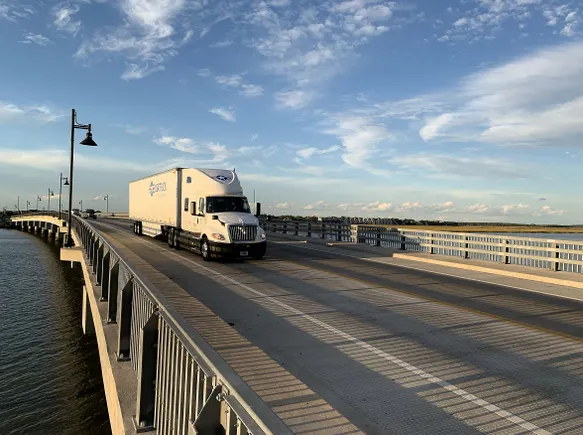
Last spring, the pandemic triggered large-scale shutdowns, and many companies like USA Truck shifted office operations to fully remote mode. For most companies, this decision was straightforward—employee safety came first.
"When the pandemic hit... the brain triggers a 'fight or flight' response, and you think, 'Okay, what do we need to do to get through this?'" said Nick Wakefield, Vice President of Human Resources, Driver Recruitment, and Retention at USA Truck, in an interview.
However, the decision to bring employees back to the office is far from black and white.Hybrid work models have become a popular option, where employees work part of the time from home and part of the time in the office.
Executives face many considerations when structuring such arrangements, from culture and safety to productivity. Returning to the workplace is a high-stakes decision. Managers facethe risk of employees leaving due to a lack of remote or hybrid options. If virus variants emerge, the safety of employees working in enclosed spaces could be threatened.Corporate culture and employee engagement may suffer in a remote environment, ultimately leading to turnover issues.
For the transportation industry, this decision is particularly tricky because many positions cannot be performed remotely. Companies that choose remote or hybrid models must also consider the impact on employees who cannot work from home, such as truck drivers and technicians.
Wakefield said USA Truck is developing a return-to-work plan, and managers, having seen the many benefits of remote operations during the pandemic, are planning hybrid schedules for their teams.
"We actually found that employees are happier," Wakefield said. "They are growing, they are thriving."
Pros and Cons of Hybrid Work
"Once we went remote, productivity soared," Wakefield said. "Our business took off."
Consolidated operating revenuegrew by nearly $30 million from 2019 to 2020, an increase of 5%. USA Truck's logistics division saw volume grow 26% from the fourth quarter of 2019 to the fourth quarter of 2020, and the trucking division's deadhead rate fell from 14.2% to 11.6% during the same period.
Wakefield said turnover rates for drivers and office employees also fell by half, and customer satisfaction improved.
The pandemic was not the first time USA Truck quickly shifted to remote work. In 2019, its Arkansas headquarters was affected by flooding, forcing the company to adjust operations overnight.
Despite the disruption, "we had great success during that time," Wakefield said, which sparked executives' interest in remote work. "We kept exploring: 'Why do we perform better in a crisis?'"
"Once we went remote, productivity soared."
—Nick Wakefield, Vice President of Human Resources, Driver Recruitment, and Retention at USA Truck
The pandemic served as a wake-up call for many employers, who discovered that their businesses could operate well—or even better—under non-traditional models.
"I think we all found that remote work can be more efficient than we might have imagined," said Brian Holland, President and CFO of Fleet Advantage.
At tb.lx, a software solutions startup under Daimler Trucks and Buses, employee productivity improved after transitioning to hybrid work.
"The combination of office and remote really can work wonders," said Sara Gorjão, Chief People Officer at tb.lx, in an email. Employees can reduce commuting time each week and use more flexible schedules to accommodate personal and family needs.
Ryan Schreiber, Director of Engagement at CarrierDirect, also believes remote work can boost productivity and efficiency.
"People can no longer rely on inefficient processes built on institutional knowledge, nor can they shout across the room to someone," Schreiber said in an email.
Gorjão noted that documentation in remote and hybrid workplaces must be "precise and accurate," with all information stored centrally in an accessible location.
Another advantage of remote work is that companies are no longer geographically constrained, which allows "companies to recruit the best talent," Schreiber said. As many companiesramp up hiring effortsto restore workforce levels to pre-pandemic numbers, the lack of hard boundaries allows executives to search a broader talent pool.
Similarly, Holland said that if only part of the workforce is in the office at any given time, companies can reduce the office space needed and associated costs.
Executives must also weigh the trade-offs of having employees dispersed across locations, and how to manage company culture and employee engagement.
"We miss being together," Holland said, adding that Fleet Advantage operates well in a remote model.
Common Pros and Cons of Remote Work
- Benefits:No commute; cost savings; avoiding virus exposure; better work-life balance.
- Challenges:Impact on collaboration; difficulty communicating effectively in real time; managing relationships virtually; troubleshooting technical issues.
Source: FlexJobs
For women, balancing full-time work with childcare is particularly difficult, especially when there is a lack of support orwhen leadership lacks flexibility and understanding.
"Unfortunately, in most cases, it is mothers who have to put their careers on hold to care for the family," said Ellen Voie, President and CEO of the Women In Trucking Association, in an email.
Voie said the remote environment may make it harder for women to concentrate. "I do think more women value the workplace because it eliminates many of the distractions of a home office."
Traditional technology and communication systems may hinder efficient work from home, although in many ways the pandemic served as a catalyst for updating systems.
Existing technology also has limitations, especially in the supply chain and transportation sectors.
"You can't fix a tire remotely," Wakefield said.
A McKinsey analysisfound that transportation is one of the industries with the lowest potential for remote work. According to the analysis, the maximum share of time that could theoretically be worked remotely is only 22%.
This contrasts sharply with the finance industry, which McKinsey estimates could see no loss of productivity with a 76% remote work share.
Some functions in transportation that could be done remotely are more difficult without face-to-face interaction. Holland cited sales as an example. Teams "had to adapt to new ways of communicating with prospects and clients," he said.
The 5 Industries with the Highest and Lowest Remote Work Potential
(Potential share of time that could be worked remotely, according to McKinsey analysis)
On the other hand, truck driving is inherently a remote job. Drivers are accustomed to physical distance from colleagues.
"In my years as a truck driver, I rarely spoke with my dispatcher and even less with my manager, yet we still built trusting relationships," said Douglas J. Zubka, an industrial-organizational psychologist who focuses on workplace behavior and conditions.
Zubka, who has worked at Wolf Driving School and FedEx Freight, believes the long-standing narrative that "remote work doesn't work or is less efficient" is just "an excuse not to try." "Just look at the stories of truck drivers—they not only survived the crisis but continued to perform excellently, delivering everything we need, and doing it completely remotely."
Communication: The Key to Success
Hybrid work can create a divide between office employees who can work flexibly from home and drivers and technicians who cannot work remotely. This is a cultural split USA Truck worked to address throughout the pandemic.
Leadership communicated with drivers and other essential-position employees to ensure they understood how their job functions support customers. Wakefield said they also ensured physical distancing and provided personal protective equipment. For remote employees, managers fostered engagement through virtual happy hours and online games.
"We placed a strong emphasis on making sure everyone understood how their role connects to the company's vision," he said.
During the pandemic, USA Truck placed a high priority on employee communication. A text message was sent weekly allowing drivers and employees to provide anonymous feedback. The company held conference calls every Friday to answer questions. It also used WorkHound to collect employee feedback.
USA Truck set up a hotline that routed directly to Wakefield's cell phone, available 24/7 for employees with COVID-related or other concerns. Wakefield then relayed any issues to the executive team for solutions.
This kept Wakefield busy, but he didn't mind.
"They are the ones out there working hard to keep America moving. Serving them is the least I can do," he said.
"The combination of office and remote really can work wonders."
—Sara Gorjão, Chief People Officer at tb.lx
COVID-related concerns may dissipate in the future, but communication remains crucial for employers choosing hybrid models and has always been a key component of the transition to hybrid.
"Equally extremely important for us is transparent communication," Gorjão said, including ensuring teams are aligned on expectations.
For Fleet Advantage, "open and honest dialogue" benefits both employees and managers, Holland said. "It's crucial to keep communication interactive and listen to employee feedback... rather than issuing directives from a corporate culture standpoint."
Management Prepares for the New Model
Executives transitioning to a hybrid model need to consider multiple factors, which is why USA Truck is examining every aspect of its business as it prepares for a return to the workplace.
"We are really thinking it through from start to finish," Wakefield said.
Questions to consider include:
- How will each manager develop a return-to-work plan?
- What is our employee communication strategy?
- Will we set up workstation sharing areas?
- Will we adopt an A-B shift schedule?
- How do we handle visitors?
- How do we comply with local or state regulations?
- Will we incentivize orrequire vaccinations?
- If cases rise again, what are our policies and response measures?
Executives may need to consult HR or legal teams to meetcorporate compliance requirements. They also need to consider the specific needs of trucking companies and their employees.
"This requires a management approach different from the typical office model based on manufacturing-style management and time clocks," Zubka said.
They may also need to examine their own biases when weighing remote work.A January analysis by PwCfound a disconnect between employee and employer expectations about office work. In the study, more than half of employees said they wanted to work remotely at least three days a week once pandemic concerns subside, while 68% of executives believed typical employees should be in the office at least three days a week.
"The view that remote work is unsustainable is an assumption based on a narrow perspective," Zubka said.
Another survey released in May by employment law firm Littler found that71% of employees prefer hybrid work, but only 55% of employers will offer it.
"It's interesting to see the divergence between employer and employee expectations," Holland said.
Majority of Men and Women Prefer Fully Remote
(Post-pandemic workplace preferences in a FlexJobs survey of 2,100 people)
Men and women may also differ in workplace preferences.A FlexJobs surveyfound that 68% of women prefer fully remote work, and 30% want hybrid. Men also prefer remote, but at a lower rate of 57%, with 41% preferring hybrid.
For transportation industry executives, understanding these nuances is crucial for recruiting and retaining women, who make up only10% of drivers。
Voie advises executives to provide flexibility for women working in hybrid environments, especially when children are on summer break or home sick.
"Leadership needs to be truly proactive in allowing women to structure their own work hours without making comments or showing negative attitudes about women working around family schedules," Voie said.
Employee Experience
Even after transitioning to remote or hybrid models, executives still need to monitor metrics and culture to ensure productivity and employee satisfaction do not decline. Holland recommends setting up dashboards with key performance indicators to stay on track with goals.
Schreiber emphasized one thing leaders should not focus on is monitoring employees to ensure they are doing their jobs while remote.
"If your organization needs employees in the office to figure out who isn't working, you have bigger problems to solve, and they aren't with the employees," he said.
Voie echoed a similar sentiment, advising leaders to recognize employees' contributions to the company "rather than counting hours or clocking minutes."
Overall, the pandemic served as a leadership lesson for USA Truck, Wakefield said.
"Often it's not the strategy that matters most," he said. "Sometimes what really matters is focusing on the employee experience."


