
A Lonely Profession: How the Pandemic Eroded Truck Drivers' Mental Health
The pandemic has made the already lonely profession of truck driving even worse. This article explores the impact of the pandemic on drivers' mental health, the current state of the industry, and corporate responses, while emphasizing the importance of breaking the stigma around mental health issues.
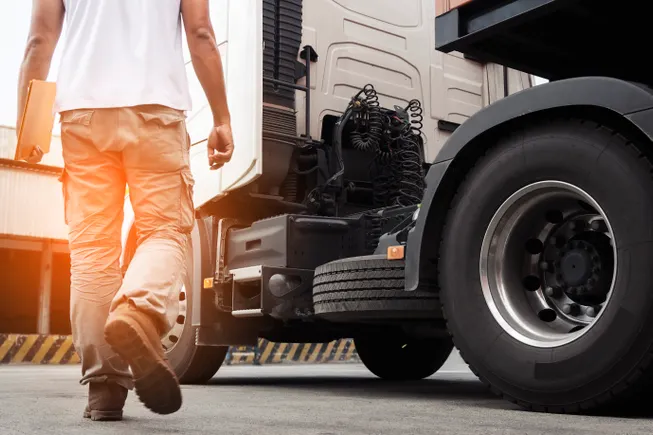
Clarissa Rankin is one of many truck drivers who witnessed everything change on the front lines of the pandemic.
"Going from state to state and seeing how other people were struggling... it was terrible," Rankin said, recalling the early impact of COVID-19. "It affected a lot of truck drivers. I know it affected me."
The pandemic intensified the already mentally taxing aspects of a truck driver's job. Michael Yonka, director of transportation safety services at Sentry Insurance, said fleets are increasingly recognizing that mental health directly impacts employees' physical health, job performance, and safety, and vice versa.
"Anxiety, depression, and prolonged loneliness from mental health issues can really lead to more health problems: poor eating, lack of sleep," Yonka said.
An unhealthy lifestyle and drowsiness "can translate into road safety issues," he added. Improving truck driver performance and safety through wellness programs may help lower insurance premiums.
Mental health resources also provide value to drivers and help with retention.
"How do you get drivers to want to work here and stay? Show them you care about them as people," Yonka said.
The pandemic intensified an already lonely job
Even before the pandemic, the transportation industry ranked fourth in suicide rates among occupational groups for both men and women,according to data from the U.S. Centers for Disease Control and Prevention. For drivers who spend long hours alone in confined spaces, trucking can be an isolating profession.
Drivers see a lot on the road, and some events can be traumatic and lead to mental health issues. For example, witnessing a fatal accident or human trafficking can trigger fear and anxiety.
As a result, post-traumatic stress disorder is one of the most commonly reported mental health issuesamong transportation professionals, second only to depression and anxiety. Experts say truck drivers are also particularly susceptible to suicidal thoughts, seasonal affective disorder, and burnout.
"How do you get drivers to want to work here and stay? Show them you care about them as people."
Michael Yonka
Director of Transportation Safety Services at Sentry Insurance
Experts point out that mental and physical health go hand in hand, and a deficiency in one can affect the other. Due to the nature of the job, truck drivers often have less healthy lifestyles. Traffic stress or pressure to deliver on time, lack of physical activity, difficulty accessing healthy food, and insufficient sleep are all contributing factors.
During the pandemic, truck drivers' already limited opportunities for human contact and access to basic necessities were, in some cases, stripped away. Truck stops and restaurants either closed voluntarily or due to government orders. Many shippers or other receivers also barred truck drivers from entering their facilities.
"It's already a lonely profession, and now they couldn't even go inside," Yonka said. "Drivers were truly isolated from society, even though they were still out on the road driving."
Being away from colleagues or other human contact can be dehumanizing and trigger mental health challenges, which were exacerbated globally as the pandemic spread.
Inanother CDC survey, nearly 41% of respondents reported that their mental health was impacted during the early stages of the pandemic. Compared to the same period in 2019, symptoms of anxiety and depression in the U.S. increased from April to June 2020.
Impact of COVID-19 on mental health in the U.S.
Respondent-reported mental health conditions, June 2020
Additionally, truck drivers bear the stress of being unable to see and comfort sick loved ones for days or weeks while on the road.
"It was really tough during the pandemic. It exacerbated the stress and problems that already existed for truck drivers," said Mona Shattell, chair and professor of the Department of Nursing Systems at the University of Central Florida, who studies truck driver mental health.
Providing help for truck drivers' psychological and emotional needs "is an area that needs improvement," she said.
Building support systems
Before the pandemic, few fleets offered dedicated mental health services for truck drivers. But anecdotal evidence suggests that COVID-19 prompted more transportation companies to start conversations about mental health and explore ways to help employees.
"The progress I see is that we're more willing to talk about it at the management level," said Nate Kennedy, director of human resources at Hogan Transportation.
Hogan is "just starting to dip its toes into the mental health space," Kennedy said, and he hopes the company—and others—will develop formal support programs.
Hogan currently encourages employees to use third-party employee assistance programs. Paper Transport also offers EAPsto employees and their families, including counseling. Dot Foods is one of the transportation companies offering resourcesto maintain physical and mental health, including EAPs and telehealth consultations.
Telehealth services saw a surge in demandduring the pandemicand are especially critical for drivers. Truck drivers find it difficult to attend in-person counseling sessions due to their schedules.
Shattell noted that some companies are also beginning to offer physical and mental wellness services at distribution centers and truck stops to meet drivers where they are.
Communication is central to helping drivers. Supervisors and dispatchers should regularly check in with truck drivers and ask how they are doing. Modern communication methods make check-ins more efficient and provide more data than in the past.
"The pandemic made everyone discover new ways of communicating," Yonka said. For example, video chats allow supervisors or dispatchers to "observe the driver's demeanor: How do they respond to your questions? How do they interact with you during the conversation?"
Data shows that peer support is also effective, Shattell said. Peer support channels include truck driver YouTube channels or Facebook groups like "Truckers for Truckers."
Rankin frequently posts videos on TikTok and other social media platforms showcasing the life of a truck driver. She emphasizes the importance of truck drivers practicing self-care to maintain physical and mental health, and offers advice to peers on healthy eating, physical exercise, making time for personal hygiene, and resting.
But she says the responsibility for maintaining health and well-being should not rest solely on truck drivers.
"Companies can do more," Rankin said. She noted that transportation companies already require drivers to watch safety training videos, and incorporating mental health and self-care into training topics would be easy.
"Include education like that, not just 'safety first' education," she said. "Yes, safety is most important, but health and mindset are equally important."
Overcoming stigma
Effectively addressing mental health requires overcoming a huge barrier: stigma.
"It's hard to talk about mental health, almost taboo, for truck drivers or society as a whole," Kennedy said.
Trucking remains a male-dominated profession, and drivers are sometimes stereotyped as "tough" or "macho." Male drivers especially hide their feelings and mental health issues because admitting and talking about these topics is seen as a sign of weakness, Shattell said.
Female truck drivers also face gender-specific pressures that affect mental health, such as discrimination, feelings of insecurity, and inadequacy from balancing life on the road with caring for family.
The pandemic changed the narrative somewhat, as millions of people began experiencing symptoms of mental health challenges. Experts say that while this is a good start, society still has a long way to go in shedding the stigma.
"Mental health is now part of our national conversation. However, I still don't think it has changed the stigma around mental health much," Shattell said.
Experts say creating a culture where mental health can be discussed at work is crucial, as it is the first step toward improvement. Employees may be reluctant to show vulnerability on sensitive topics, but management can lead by example.
"If we act like it's no big deal to talk about it, then drivers will follow suit and be more willing to talk about it," Kennedy said.
