
From Richmond: How Virginia's Capital Nurtured Three LTL Trucking Giants
In the 1930s, J. Harwood Cochrane, Lillian and Earl Congdon Sr., and W.W. Estes each founded family trucking companies in Richmond, Virginia, initially transporting agricultural products. Today, Overnite Transportation Co. (later renamed TForce Freight), Old Dominion Freight Line, and Estes Express Lines have become top LTL carriers nationwide. This article analyzes the geographic, familial, and strategic factors behind their success.
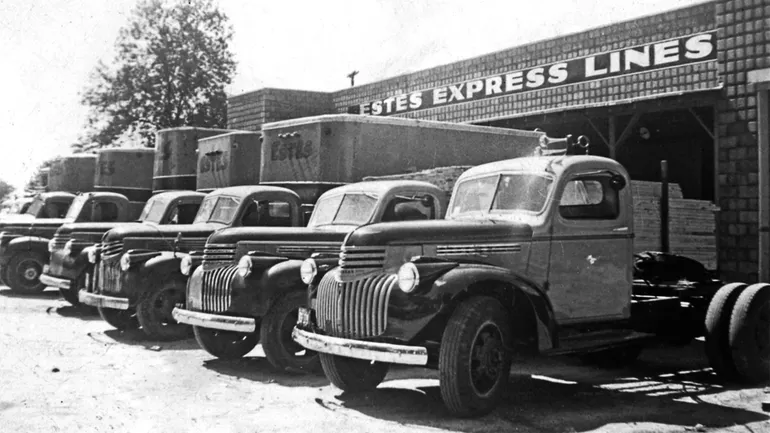
In the 1930s, when J. Harwood Cochrane, Lillian and Earl Congdon Sr., and W.W. Estes each founded their family trucking businesses, the cargo they transported was mainly eggs, milk, livestock, and other agricultural products. Nearly a century later, Cochrane's Overnite Transportation Co., the Congdon family's Old Dominion Freight Line, and Estes Express Lines have evolved along with changes in their customers and freight mix. These three carriers, once all headquartered in Richmond, Virginia, gradually expanded their trucks, employees, and facilities to rank among the top less-than-truckload (LTL) carriers in the nation.
"As Virginia's economy grew, so did the opportunities for their businesses to grow, because so many industries depended on them," said P. Dale Bennett, president and CEO of the Virginia Trucking Association.

As many competitors went out of business, the Richmond roots of these three carriers played a key role in their success. The nearby Port of Norfolk provided freight, and Interstate 95 connected the companies with customers up and down the East Coast. This historic U.S. logistics hub became a springboard for the companies, allowing them to compete among the few giants that now control most of the market share in this multibillion-dollar trucking industry.
"Richmond has been a great place for us to bring in talent and let employees grow with the company," said William "Billy" Hupp, vice chairman and executive vice president of Estes. "Richmond as a whole has really supported that growth."

The 'old-school' way of doing business
These family businesses initially never aspired to become LTL freight titans. However, they all carried freight for multiple customers to multiple locations. Through real estate acquisitions and mergers, they built nationwide terminal networks, a necessity for entering this high-barrier niche market.

"Some of these things were not deeply thought out," said LTL expert Satish Jindel. "They were just responding to the situation at hand, keeping the business going, and supporting their families."
Due to their shared industry and Virginia origins, these founding families were closely intertwined, competing for freight and talent while also fostering each other's business growth. Cochrane mentored Robey Estes, who took over Estes Express Lines from his father in 1953. When Overnite's facilities became insufficient, he sold them to the growing Estes business, Hupp said. This relationship allowed Estes to acquire Overnite's former headquarters and Richmond terminal.
In 1954, Estes lured away Old Dominion's only salesman, Pete Woodlief, at a salary of $140 per week, according to Old Dominion's corporate history, Helping the World Keep Promises. "He left us, went to Estes, and over the next few years did a great job bringing Old Dominion's freight business to Estes Express," said Earl Congdon Jr., who later ran the company with his mother and brother Jack.
This opportunistic mindset still guides Estes today, as the company tends to forgo a fixed freight portfolio strategy and adapts flexibly as demand shifts. The carrier has also capitalized onRichmond's renaissance as a food destination, leveraging the city's cultural renewal to recruit talent for its facilities. "We run the business the old-school way... staying opportunistic," Hupp said.

Family ownership and non-unionization
Jindel attributes the success and longevity of Overnite, Old Dominion, and Estes to another geographic advantage. He said the city's distance from the stronghold of the International Brotherhood of Teamsters allowed these families to successfully prevent unions from organizing their workforce. "Union power was very strong in Pennsylvania, New Jersey, Detroit, Ohio, and elsewhere," Jindel said. "(Being in Richmond) helped them stay non-union."
Overnite was once the largest non-union carrier in the U.S., and its employees eventually joined the Teamsters after the company was acquired by UPS in 2005. UPS renamed it UPS Freight, and then in 2021sold it to Canada's TFI International, which renamed it TForce Freight.

The founding families of these carriers, like many business owners, took pride in taking care of their employees, which they believed eliminated the need for unions. But they also feared the financial consequences of unionization. After Old Dominion acquired North Carolina-based Bottoms-Fiske Truck Lines in 1959, the Congdon brothers met with Bottoms-Fiske employees to persuade them not to join the Teamsters, according to the corporate history. When persuasion failed, Earl Jr.—trembling with fear and carrying a .38-caliber revolver for protection—personally drove the first truck through the picket line, according to the corporate history. Old Dominion sent Richmond drivers to help move freight, and the family responded to threats with intimidation. "We certainly wouldn't fire the men who took bullets and dynamite for us, and then rehire the ones who fired the guns and threw the dynamite," Earl Congdon Jr. told reporters during the strike that continued into 1960, according to the corporate history.
In a moment of corporate solidarity, during a strike at Estes, Cochrane sent Overnite drivers to help his Richmond counterpart continue serving customers, Hupp said. "They stuck together and helped each other survive," Hupp said.

Staying true to Virginia roots
The pride and ambition of these three families, along with a great deal of effort and adaptation, helped sustain their companies even as Virginia railroads did their best to block the success of the state's fledgling trucking industry, Bennett said. "They fought hard and were very committed to the opportunities they had and could seize," said the state trucking association CEO.
Estes moved to Richmond during the post-World War II freight boom. Its headquarters has been in the former Home Beneficial Life Insurance building since 1998, occupying an entire block on West Broad Street. A Santa Claus figure placed on the roof of this Georgian-style brick building every Christmas showcases the carrier's growth and its deep connection to the city.
Overnite's success came despite its long-standing policy of only hauling in the South, to avoid competing with Cochrane Transportation, which Cochrane had previously co-founded with his brother Calvin. "There's no harm in starting small," Cochrane advised trucking executives in a 1989 interview with the association's magazine, Virginia Trucking. "Don't compare. What matters is that you continually improve what you do."

Old Dominion's name still hints at its local route from Richmond to the Norfolk steamship docks, where drivers transported the state's famous tobacco, as well as paper, coffee, and canned goods. The colonial nickname of Lillian Congdon's home state, where she met Earl Sr. in the 1920s and later founded Old Dominion, was retained when the company moved to North Carolina after acquiring Bottoms-Fiske. "Over the years... some publications called the company 'a North Carolina trucking company with a Virginia name,'" according to the corporate history. "Even as the company spread nationwide, it remained proud of its original Richmond roots."