
How the Union Pacific-Norfolk Southern Merger Would Reshape the Railway Market Landscape
Union Pacific plans to acquire Norfolk Southern, and if approved, it would create a North American rail giant, sparking intense debate over competition and rates in the industry. Based on 2024 financial data and expert analysis, this article examines the post-merger market size, risks of regional competitive imbalance, the likelihood of rate increases, and the differing perspectives of railroads and shippers.
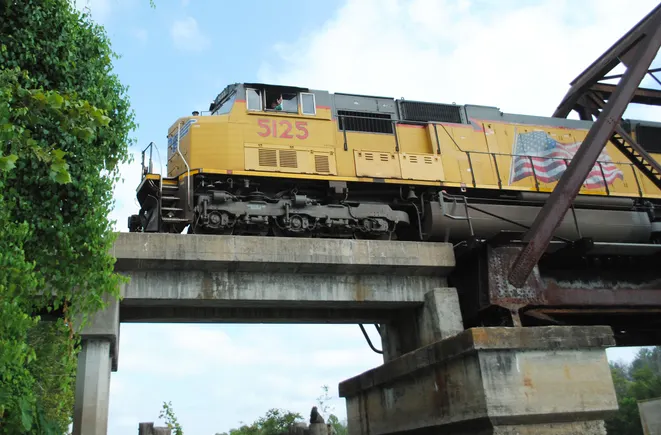
Union Pacific's proposed acquisition of Norfolk Southern, if approved, would create a railroad giant that could swallow up the vast majority of North American rail freight.
The debate over the merger's competitive impact on other players in the rail industry is intensifying. Competitors worry that this coast-to-coast network will use its immense market power to raise rates and stifle rail competition; Union Pacific and Norfolk Southern, however, say the merger will enhance competition among railroads and between railroads and trucking.
The U.S. Surface Transportation Board (STB) rejected the two railroads' more than 6,000-page merger application filed in December on January 16, citing it as incomplete. Union Pacific stated it would provide regulators with more information on the merged company's projected market share, submit a complete merger agreement, and address other deficiencies identified by the board.
As the two companies refine their application and expect to resubmit by the end of June, this article outlines the scale of the merger and the views of various stakeholders on its potential impact.
How big is it?
What is certain: Based on 2024 financial results, the combined Union Pacific transcontinental network would have revenue 56% higher than the second-largest railroad, BNSF.
The combined Union Pacific-Norfolk Southern network would be a "rail system of unprecedented scale, with a market share exceeding 40% in most commodity categories," said Jason Miller, the Eli Broad Endowed Professor of Supply Chain Management at Michigan State University, during an October 28 webinar. According to Miller's analysis of freight data, the network would rank first or second in nearly all rail-shipped commodities except iron ore.
Peter Swan, retired associate professor of logistics and operations management at Penn State Harrisburg, said in an email that Union Pacific would use this scale and reach to suppress competition.
"Keeping gateways open is not the same as maintaining through rates and local rates at current levels."
— Peter Swan, retired associate professor of logistics and operations management at Penn State Harrisburg
Thanks to the current regional duopoly structure—dominated by BNSF and Union Pacific in the West, and CSX and Norfolk Southern in the East—many rail shippers have competitive options.
For example, in Houston, the Port Terminal Railroad Association provides access for Union Pacific, BNSF, and Canadian Pacific Kansas City (CPKC) to large petrochemical plants and port facilities. Similarly, CSX and Norfolk Southern can access Conrail—the neutral local service provider in Detroit, northern New Jersey, and the Philadelphia area—allowing shippers to choose either railroad.
Swan said the combined Union Pacific-Norfolk Southern would break the regional competitive balance in these areas and elsewhere.
Currently, eastbound freight originating on the Union Pacific network can interchange with Norfolk Southern or CSX; conversely, westbound freight originating on Norfolk Southern can interchange with Union Pacific or BNSF. Swan explained that in a merged world, freight originating on Union Pacific or Norfolk Southern would likely only flow to the combined Union system.
Rate hikes on the horizon?
Swan noted that while shippers could still control routing—and choose BNSF-Norfolk Southern or CSX-Union Pacific combinations—Union Pacific could set high local rates, making it impossible for BNSF and CSX to compete effectively.
"Union Pacific and Norfolk Southern could offer lower contract rates than BNSF, but still potentially higher than what Union Pacific and BNSF would offer in a level playing field," Swan said. "If Union Pacific has a monopoly and Norfolk Southern competes with CSX, the situation would be similar."
Swan said that for carload and bulk shipments where BNSF and CSX control the origin or destination, they might be forced to take similar actions. "Therefore, any negative impact on competition could spread across the industry, not just to Union Pacific and Norfolk Southern."
He added that keeping existing interchange points such as Chicago, St. Louis, and New Orleans open does not necessarily ensure competition. "Keeping gateways open is not the same as maintaining through rates and local rates at current levels."
These concerns have not gone unnoticed in rail-dependent industries. "The merger is likely to lead to higher rates, which could translate into higher inflation, as energy, chemical, and agricultural shippers pass on increased transportation costs to customers," said Chris Jahn, CEO of the American Chemistry Council, in an interview.
Jahn said the evidence clearly shows that reduced competition leads to higher rates. Over the past 15 years, rates on non-competitive lines have risen 240%, while rates on competitive rail lines have risen only 24%.

The merger could also have downstream effects on other transportation rates, especially the trucking market.
Michigan State's Miller noted that railroads have pricing power in carload and bulk shipments, but lack an advantage in intermodal because container and trailer rates are largely determined by the trucking industry.
Nevertheless, if railroads raise rates, truckers will follow—transportation prices will rise along the supply chain, fueling inflation and making U.S. companies less competitive globally, two members of the National Industrial Transportation League said in interviews. They requested anonymity and withheld their company names for fear of railroad retaliation.
Union Pacific: Competition remains
Union Pacific CEO Jim Vena dismissed shipper and railroad concerns about competition. He said the Union Pacific-Norfolk Southern merger is an end-to-end merger with minimal network overlap. The two railroads have joint service at only a few customer locations in the Midwest, and Union Pacific will take steps to ensure these facilities can still use both railroads, adding that other customers will not see reduced competitive options.
"We will keep all interchange points open. We will not close any interchange points," Vena said in an October interview. "Some will say, 'You have too much market power and will force us to go with you.' Absolutely not."
Vena said shippers can still choose to move freight via CSX and BNSF based on service and price.
"If you're a shipper somewhere on the Gulf Coast going to the eastern U.S.... you'll take the shortest route. The shortest route to Florida is via New Orleans on CSX," he said. "We will keep that gateway open because if you detour 300 miles on a Norfolk Southern route, you lose."
Vena also said that in other cases where Union Pacific's route is comparable to BNSF or CSX, shippers will retain competitive options. In the merger application, Union Pacific and Norfolk Southern said they would offer shippers "Committed Gateway Pricing."
"Some will say, 'You have too much market power and will force us to go with you.' Absolutely not."
— Jim Vena, CEO of Union Pacific
The two companies said Committed Gateway Pricing would simplify pricing for interline routes that may not directly benefit from the merger.
"Committed Gateway Pricing is purely additive, offering additional rate and service options without removing any existing choices," said Kenny Rocker, Union Pacific's executive vice president of marketing and sales, during a webcast following the December 19 merger application filing.
However, the CEOs of Union Pacific competitors BNSF and CPKC said few shippers would be able to take advantage of Committed Gateway Pricing. CPKC CEO Keith Creel said only 20% of customers could benefit from the program; BNSF CEO Katie Farmer said at a January Midwest rail shipper winter meeting that the figure was just 1%.
Vena also said that rail alliances are doomed to fail in the long run, and that a transcontinental merger is the most effective way to improve service and compete with trucks.
However, the recently launched BNSF-CSX intermodal partnership—connecting the Southwest and Southeast—immediately impacted Norfolk Southern's domestic truck-competitive intermodal volumes. In the six weeks following the August service launch, CSX intermodal volumes rose 8%, while Norfolk Southern fell 6.8%, according to weekly traffic reports.
BNSF and CSX executives said their alliance was in the works before the merger was announced, but Union Pacific and Norfolk Southern view it as evidence of increased competition.
"We are beginning to see revenue loss from competitors' reactions to the merger announcement," Norfolk Southern CEO Mark George said on a third-quarter earnings call. "We expect the impact to expand in the fourth quarter and continue to be a challenge in the near and medium term."