
Knight-Swift CEO: New regulations are eliminating low-cost capacity, tightening market supply-demand dynamics
Knight-Swift Transportation Holdings CEO Adam Miller said on Wednesday's earnings call that federal regulatory changes initiated last year, such as stricter English proficiency requirements, are driving capacity out of the market. He believes the market improvement is driven more by capacity reduction than demand, and noted that the regulatory effects are still in their early stages. The company's Q1 revenue increased 1.4% year-over-year to $1.85 billion, with operating income down 57.1% to $28.6 million.
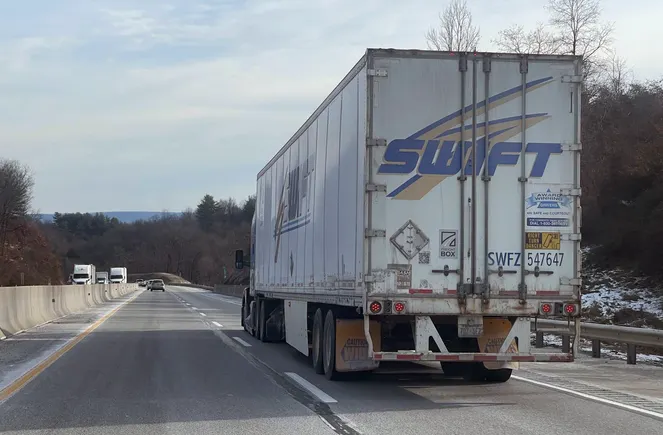
Multiple regulatory changes at the federal level—including one launched last yearwith stricter English proficiency requirements—are driving capacity out of the market. Knight-Swift Transportation Holdings CEO Adam Miller made these remarks during an earnings call on Wednesday.
The large freight group told investors on its Q1 earnings call that market capacity has clearly tightened, which helps alleviate unsustainable freight rates and weed out non-compliant carriers. Miller said regulatory changes are driving capacity reductions and more favorable market conditions, but these effects are still in their early stages.
"The improvement we're seeing," Miller said, "is primarily driven by capacity reductions rather than demand growth." Otherindustry stakeholdersalso describe the current market dynamics as a supply-side-driven turning point in the freight market.
Among the changes, the industry has seen the Federal Motor Carrier Safety Administration (FMCSA) intensify its crackdown on non-compliant CDL schools; on the congressional side, there are alsolegislative proposals such as Dalilah's Law, which could impose stricter standards for the issuance and renewal of CDLs for non-residents.
"The market environment is indeed ready," Miller said, to support sustainable freight rates for quality, compliant carriers.
Although Q1 revenue rose 1.4% year-over-year to $1.85 billion, operating income fell 57.1% to $28.6 million,the company reported. Adjusted operating income was $49.8 million, reflecting headwinds from adverse LTL claims developments, weather, and diesel prices that the company noted last week.
Additionally, there are early signs of improvement on the demand side. Bid targets have been raised from the previous low-to-mid single-digit percentage range to a high-single-digit to low-double-digit percentage growth range over current prices. Miller noted this shift is a significant upward move from last quarter's target range.
More notably, several shippers have proactively initiated discussions about peak-season demand support, which is uncommon at this time of year, Miller added.
"There are more reasons for optimism in the industry right now than at any time in the past four-plus years," Miller said. He also noted that the industry is moving away from a one-way freight market with an influx of carriers—where many market participants operated under different rules, distorting prices.
Miller mentioned that during the spot rate surge in 2021, many drivers entered the industry without adequate training; meanwhile, the industry also faced new entrants with questionable safety records, as well as bad actors known as "chameleon carriers"—companies that can change their identity by shutting down and re-registering to evade accountability for safety violations and other issues.
"I think FMCSA will implement more regulations in the future... it's necessary," Miller said.