
Amazon Supply Chain Services: A Logistics Giant in the Making?
On May 4, Amazon launched Amazon Supply Chain Services (ASCS), opening its transportation, delivery, and fulfillment network to all businesses. Experts believe that while this move will not immediately replace existing giants such as FedEx and UPS, it will pose a significant challenge to the industry given its vast infrastructure and bundled services. This article explores the impact of ASCS on competitors, the types of customers it suits, and early potential obstacles.
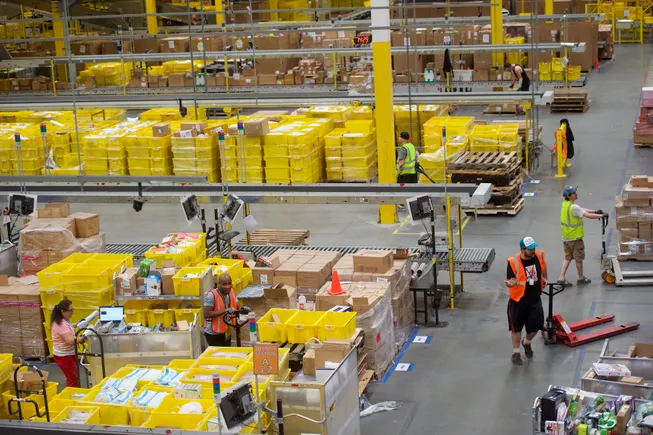
Amazon is opening its transportation, delivery, and fulfillment services to all businesses. While this won't put logistics giants like FedEx and UPS out of business in the short term, it still casts a huge shadow over the industry, experts told Supply Chain Dive.
On May 4, the company announced the launch of Amazon Supply Chain Services (ASCS), offering freight, parcel delivery, and warehousing and distribution services through its network of distribution centers, trailers, intermodal containers, and planes across the United States.
Amazon Supply Chain Services capabilities at a glance
| Service Name | Capability Description |
|---|---|
| Amazon Air Freight | Covers multiple regions with over 100 aircraft and more than 250 daily flights, plus international charter services. |
| Amazon Global Logistics | Provides inbound transportation from China to Amazon's fulfillment networks in the U.S., UK, EU, and Japan, including ocean shipping from Vietnam to the U.S. |
| Amazon Freight (Intermodal) | For inbound shipments to Amazon facilities and external destinations, using more than 24,000 owned containers and rail partners on thousands of U.S. lanes. |
| Amazon Freight (LTL) | Covers parts of the U.S., providing less-than-truckload shipping for inbound freight to Amazon facilities. |
| Amazon Freight (FTL) | For inbound shipments to Amazon facilities and external destinations, using over 80,000 trailers across the U.S. for 53-foot dry van transportation. |
| Amazon Delivery | 2-5 day ground parcel delivery across the 48 contiguous U.S. states. |
| Amazon Warehousing & Distribution | Offers low-cost bulk storage and replenishment across multiple sales and distribution channels. |
| Multi-Channel Fulfillment | Order picking, packing, and delivery across sales channels. |
Previously, Amazon had offered various ASCS services to marketplace sellers through "Supply Chain by Amazon," but this launch extends the availability of the suite to all businesses. Although Matthew Hertz, CEO and founder of third-party logistics matchmaking platform Third Person, doesn't see this announcement as an immediate game-changer, he said Amazon has been steadily winning new business in products like Amazon Delivery and Multi-Channel Fulfillment.
"I think over the next three years, they will grow organically, and as customers grow, this business will continue to take more share," Hertz said.
Supply Chain Dive spoke with Hertz and other logistics and e-commerce industry observers about how ASCS might impact near-term competition, which customers are best suited for its services, and potential hurdles in the initial rollout. Here's what shippers need to know.
Amazon Supply Chain Services vs. industry giants
ASCS services touch the turf of established logistics providers, but some industry players may be more vulnerable than others.
According to parcel analyst and founder of LPF Spend Management Nate Skiver, the 2-5 day parcel delivery service included in ASCS—Amazon Delivery—could pose a threat to parcel carriers on pricing. He added that smaller alternative carriers focused on attracting customers with low prices are more likely to lose volume to Amazon Delivery.
"The only retention tool these providers have is price," Skiver said. "Generally speaking, their services aren't differentiated enough to respond with anything other than price cuts."
Skiver said FedEx and UPS are also vulnerable to pricing competition from Amazon Delivery. However, both carriers have been prioritizing delivery in high-margin verticals like healthcare, which require more complex logistics services. Meanwhile, low-value e-commerce parcels to residences—an area where Amazon has already established a presence—are no longer a focus for the two delivery giants.
"Both carriers have made it clear that in most cases they won't discount lightweight e-commerce parcels very aggressively, and that's exactly the area Amazon is targeting," Skiver said.

As for ASCS's trucking services, Scooter Sayers, LTL consultant at Sayers Logistics, said Amazon still has limitations in matching LTL industry giants like FedEx Freight and Old Dominion Freight Line. Currently, according to its website, Amazon Freight only provides LTL coverage for inbound shipments to Amazon facilities in select parts of the U.S. Sayers noted the company would need to expand its existing infrastructure and driver workforce to serve a broader range of freight and better compete with other carriers.
ASCS also offers distribution and fulfillment services, but experts noted Amazon has held a significant position in this space for years through Fulfillment by Amazon for third-party sellers. Additionally, Amazon Warehousing & Distribution and Amazon Multi-Channel Fulfillment already provide storage and fulfillment for products entering the e-commerce giant's network or external channels.
"Amazon is already fulfilling billions of parcels for third parties," said Derek Lossing, founder of Cirrus Global Advisors and former Amazon logistics executive.
Lossing said that while the individual components of ASCS may not be new or threatening to all logistics incumbents, bundling these disparate services into one package and marketing them to a broader set of potential customers could provide additional value to businesses and pose a greater competitive challenge.
"None of these are transformative on their own," he said of the ASCS suite. "But I think if you can truly bundle all of this together, this announcement has power, and it's more powerful than what any single company offers."
Using Amazon Supply Chain Services: Customer fit and risks
Even if ASCS doesn't yet topple all other logistics players, the service could still be an attractive option for brands.
Currently, ASCS serves a variety of companies, including trucking for 3M and Procter & Gamble, inventory placement for Lands' End, and parcel delivery for American Eagle Outfitters. Before the ASCS launch, companies like cookware seller Avacraft had already used Amazon Warehousing & Distribution to improve inventory management. Similarly, brands like children's subscription box company KiwiCo and Bark, parent of BarkBox, have leveraged Amazon Delivery for speed and cost advantages.
According to Lossing, brands experiencing rapid growth and needing to quickly scale their supply chains to meet demand are prime candidates for ASCS's customer roster, as they may seek one-stop logistics services from the source of production to the end consumer.
"None of these are transformative on their own. But I think if you can truly bundle all of this together, this announcement has power, and it's more powerful than what any single company offers."
— Derek Lossing, founder of Cirrus Global Advisors and former Amazon logistics executive
Skiver of LPF Spend Management said Amazon Delivery is particularly well-suited for retailers already using Amazon for inventory placement and fulfillment. He added that direct-to-consumer shippers, as well as businesses and omnichannel retailers shipping large volumes of lightweight and residential parcels, may be interested in Amazon Delivery.
However, experts said brands should weigh potential pros and cons before plugging into ASCS. For example, experts noted it's unclear how Amazon will allocate capacity between inventory sold on its own marketplace and products from customers using the company solely as a logistics partner. An Amazon spokesperson said in an email to Supply Chain Dive that the company ensures all customers have options to maintain healthy inventory levels, whether they sell on Amazon or across multiple sales channels.
While capacity constraints are not a risk unique to Amazon, challenges could intensify ahead of the holiday peak season as sellers fill Amazon warehouses with inventory in anticipation of expected order surges. In past years, the e-commerce giant has advised sellers to send in Black Friday inventory early to avoid capacity limits.
"This is already difficult to handle," said Lossing of Cirrus Global Advisors. "So if a bunch of large enterprise brands want to triple their volume in the same month, even at Amazon, there's a ceiling on what they can actually do."
How Amazon handles data from businesses using its services also remains a question, experts told Supply Chain Dive. The e-commerce giant competes with various brands through its private-label business—an area that has previously drawn regulatory scrutiny.
An Amazon spokesperson said the company uses data shared by logistics customers to operate and improve its services, adding that Amazon prohibits using sales data received or collected from ASCS customers to make purchasing, inventory level, or pricing decisions for its own store products.
Despite concerns, Amazon is known for addressing product flaws and resolving outstanding issues, even if it takes time, said Ninaad Acharya, CEO of Fulfillment IQ.
"I don't want to be an early customer, but I definitely see very good value coming on the other side," he said of ASCS.