
New National Autonomous Vehicle Regulatory Framework Provisions Added to U.S. Surface Transportation Bill
U.S. congressional lawmakers from both parties have reached a preliminary agreement on the Building America 250 Act, a five-year surface transportation reauthorization bill that includes provisions to establish a national regulatory framework for autonomous commercial vehicles. The bill requires the Secretary of Transportation to develop safety standards within six months to two years and allows manufacturers to self-certify safety cases, drawing mixed reactions from the industry.
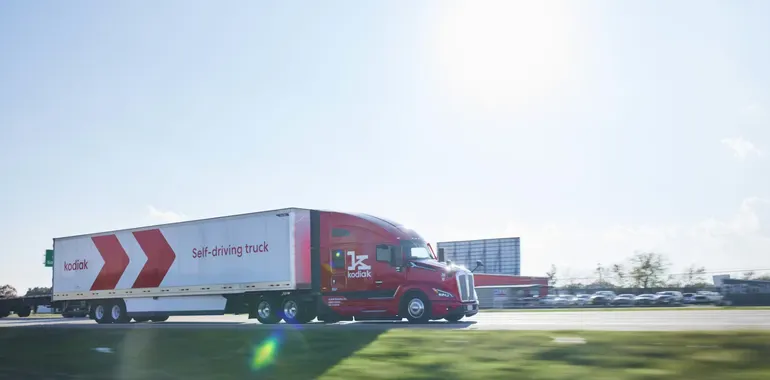
A bipartisan preliminary agreement on a five-year surface transportation reauthorization bill for major U.S. infrastructure projects includes provisions to establish national regulatory guidelines for autonomous trucks. The bill would allocate billions of dollars in federal funding to critical infrastructure projects.
The agreement, known as the Building America's 250 Act, was announced on Sunday by House Transportation and Infrastructure Committee Chairman Sam Graves, a Republican from Missouri, and the committee's ranking member, Rick Larsen, a Democrat from Washington. The agreement also "provides the first-ever framework for autonomous commercial motor vehicles."
Although the legislation still needs to go through other procedural steps, lawmakers said the goal is to get the bill from Congress to the President's desk for signature before the current surface transportation authorization expires on September 30. The bill was introduced in the House on Tuesday, and the Transportation and Infrastructure Committee is expected to begin marking up the legislation on Thursday.
Both Graves and Larsen acknowledged that the agreement, which funds national highway, road, and rail projects for fiscal years 2027 through 2031, was reached after more than 18 months of negotiations.
Industry to develop its own safety case provisions
The bill as currently drafted includes a section on "Safe Integration of Automated Commercial Motor Vehicles" requiring new regulations within six months to two years, covering the following:
- The Secretary of Transportation to establish safety standard regulations for interstate commercial transportation of autonomous vehicles;
- Requiring automated driving system manufacturers to establish and maintain safety standards that include their own safety case, which must "provide claims, arguments, and evidence" demonstrating that the technology's reliability is at least comparable to that of a conventional commercial driver;
- Establishing a motor carrier rulemaking committee to make recommendations;
- Requiring the development of cybersecurity plans, policies, and prevention/response measures;
- Establishing collision reporting requirements;
- Limiting the number of autonomous commercial vehicles that a single remote assistant or dispatcher can supervise simultaneously;
- Providing standards for alerting other road users when an autonomous vehicle enters a "minimal risk state."
The bill also requires that autonomous or semi-autonomous school buses, vehicles carrying hazardous materials placards, and "other operations" as determined by the Secretary of Transportation must have a human operator.
Despite the safety and regulatory oversight provisions in the bill, the Owner-Operator Independent Drivers Association, which has raised safety concerns about the technology, expressed concerns about the proposed legislation. In a statement, the organization said the bill gives "automated vehicle manufacturers the ability to self-certify when deploying technology on public roads," calling the provision "very troubling."
Autonomous vehicle stakeholders welcome the bill
The inclusion of provisions to establish a national regulatory framework for autonomous commercial motor vehicles in the bill was welcomed by technology developers and industry advocates.
Don Burnette, founder and CEO of Kodiak AI, said in a statement that if the bill is passed, it "would mark an important milestone." He added that it would lead to "the establishment of a comprehensive federal regulatory framework for autonomous trucks, bringing further regulatory certainty to the autonomous trucking industry."
Currently, companies including Kodiak AI operate in an environment that varies by state, with different rules for driverless trucks. Although this has not slowed the company's deployment efforts in the Southwest, Southeast, and Midwest regions of the U.S., Burnette said that the establishment of national rules would replace the patchwork of state regulations. He added that the bill would set strong safety standards and give the Department of Transportation "the tools needed to oversee the scaled deployment of autonomous trucks, while supporting American innovation and investing in the transportation workforce."
Ariel Wolf, chair of the Autonomous and Connected Mobility practice at Venable LLP, said in an email to Trucking Dive that establishing a national autonomous vehicle framework increases predictability for the industry and stakeholders by providing a unified set of rules. Wolf, who is also general counsel for the Autonomous Vehicle Industry Association, believes this could accelerate capital investment in the sector.
Wolf noted that the autonomous vehicle section of the bill includes important language clarifying how trucks comply with Federal Motor Carrier Safety Administration regulations, which set high safety standards that can preempt conflicting state laws.
Wolf acknowledged that the Transportation and Infrastructure Committee and other congressional committees will continue to discuss and amend the bill before a final version passes through Congress, but he remains optimistic about the industry's prospects.
"Including this language in the broader surface transportation reauthorization bill text means that committee leadership views the framework for commercial motor vehicles equipped with automated driving systems as a key national priority," Wolf said. "While there is a long road ahead, this is a very good first step."