
Volvo Autonomous Solutions Announces Fully Driverless Highway Operations in the U.S. in Q1 2027
At its Capital Markets Day event held in Sweden, Volvo Autonomous Solutions announced that it will remove safety drivers and achieve fully driverless operations on U.S. highways in the first quarter of 2027. The company's president, Nils Jaeger, stated that it will operate more than 300 autonomous trucks by the end of 2027 and scale up industrial operations in 2028.
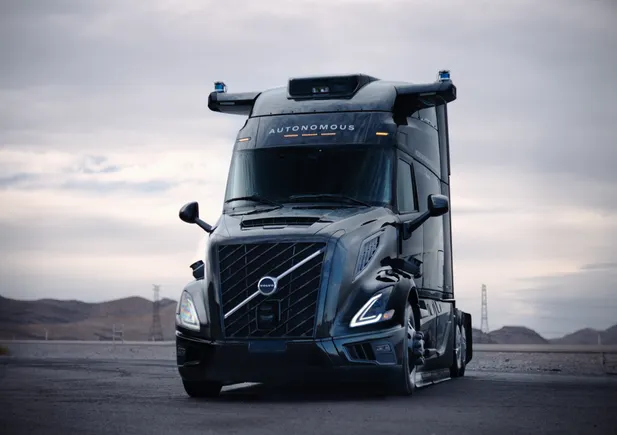
Volvo Autonomous Solutions announced at its Capital Markets Day event in Sweden on Wednesday that it plans to remove safety drivers and achieve fully driverless operations on U.S. highways in the first quarter of 2027.

"We are ready next year," said Nils Jaeger, president of Volvo Autonomous Solutions, at the event. He added that by the end of 2027, the company will operate more than 300 autonomous trucks on U.S. highways, followed by industrial-scale expansion in 2028. According to the event presentation materials, the trucks Jaeger mentioned will mainly operate in the U.S. Sunbelt region.
Founded in 2019, Volvo Autonomous Solutions is a subsidiary of the Volvo Group and collaborates with multiple autonomous driving technology companies to develop autonomous transportation solutions.
This transition to driverless operations marks the end of the company's testing phase and pushes it toward technology scaling. In 2024, the company launched a tractor equipped with Aurora Innovation's driverless technology and completed full integrated production of the technology at its new New River Valley plant in Dublin, Virginia. In October 2025, Volvo stated that it was only a few quarters away from removing safety drivers from its autonomous trucks.
While manufacturing trucks equipped with driverless technology, Volvo and Aurora continue to expand new routes. In May of this year, the two companies launched a new 200-mile driverless route between Dallas and Oklahoma City.
Jaeger said that having more driverless trucks operating on U.S. roads will enable the company to "introduce autonomous freight services to an increasing number of customers."
Volvo noted in the presentation materials that by 2035, the demand for long-haul autonomous trucks in the U.S. could reach 220,000 units.
"In less than 10 years, 1 in 10 trucks you see on U.S. highways will be driverless," Jaeger said, citing industry forecasts.
He added that Volvo's presence in the market will "unlock mass adoption of autonomous trucks" by "removing key barriers for participants," including upfront capital requirements and shifting regulatory responsibility away from customers.
Aurora Innovation said in a LinkedIn post that its goal in working with Volvo has "always been to bring autonomous freight to scale." Before scaling up production, the technology company announced in May of last year that it had closed its safety case—an important milestone for Aurora. This move indicates that the company has completed the documentation and test results proving its autonomous technology reaches an acceptable level of safety, thereby clearing the path from supervised testing to driverless commercial operations.
Jaeger said the company's next step is to "leverage our strong position" to increase production.
According to the presentation materials, Volvo expects revenue from autonomous trucks could reach $3 billion within five years.
"We will achieve scale, and we will achieve it at an industrial level," Jaeger said.