
Oregon Automated Oversize Permit System Saves Nearly $940,000 in First Year
The Oregon Department of Transportation stated that the automated oversize permit and route planning system, ORION, launched in 2025, saved approximately $940,000 in its first year of use. The system replaced manual paper map reviews, processing applications instantly and providing safe and efficient routes, while still retaining manual review for specific cases.
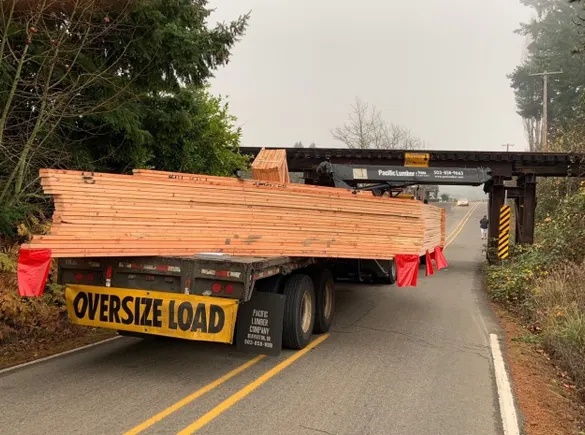
At a Glance
- The Oregon Department of Transportation said in an Aug. 19 press release that the automated oversize load permitting and route planning features launched in 2025 saved $940,000 in their first year of use.
- Oregon's Route Information Online project (ORION) previously relied on analysts using paper maps to review vehicle clearance, while the digital system can process applications instantly and provide the safest, fastest routes.
- State officials said, "Certain load or route criteria still trigger additional review and approval by analysts and road authorities. However, the process has been largely automated, and the system sends emails to road authorities notifying them of permits awaiting review in ORION."
Deep Dive
Oregon was among the last states to automate oversize load permitting, following a bridge strike in Washington state in 2013 that spurred reform.
That incident involved a 2010 Kenworth flatbed semi-truck, escorted by a pilot car, striking the Skagit River Bridge on Interstate 5, causing a Dodge pickup and a Subaru to plunge into the river. All occupants survived.
The National Transportation Safety Board's investigation found a series of deficiencies and called for reforms.
The Federal Highway Administration noted in its response following the incident that by 2015, most states had automated their oversize and overweight permitting systems.
But several states, including Oregon, Kentucky, and Vermont, had no automation plans at that time. Since then, these states have changed that.
For Oregon, oversize traffic has increased year over year, and the modernization project eliminated the need to fill seven vacant positions. Kara Phelps, Oregon DOT's commercial and compliance administrator, said in the press release, "Ensuring these oversize loads can travel safely and securely across the state is critical to the safety of the traveling public, commercial drivers, and Oregon's roads and bridges."