
Federal Reserve Keeps Benchmark Interest Rate Unchanged, Removes Language on Future Rate Cut Bias
The Federal Reserve kept interest rates unchanged at its June meeting and removed language in its policy statement about possible future rate cuts. Chair Warsh stated he is firmly committed to achieving price stability, while also announcing the formation of five working groups to review the central bank's policy framework.
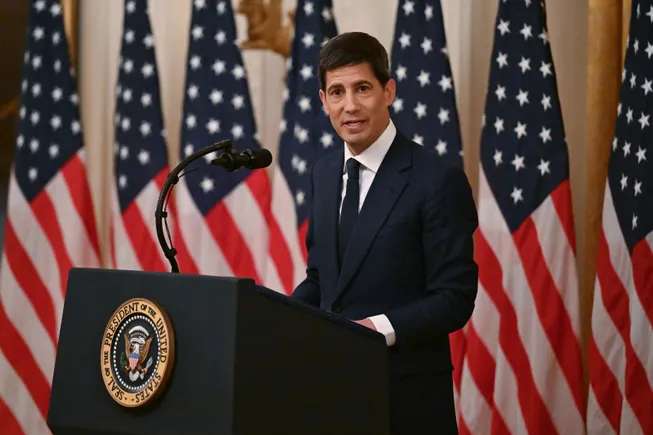
Key points:
- The Federal Reserve held its benchmark interest rate steady on Wednesday while removing language from its policy statement that hinted at a future bias toward rate cuts.
- In the policy statement released after its two-day meeting, the Federal Open Market Committee (FOMC) voted 12-0 to remove the phrase about "further adjustments" to the benchmark rate beyond the multiple cuts it had signaled between September 2024 and December 2025 in its April 29 statement. Fed officials projected in their dot plot that the benchmark rate, currently in the 3.5% to 3.75% range, would end the year at 3.8%.
- The FOMC noted that inflation remains above the central bank's 2% target, "partly reflecting supply shocks that have driven up prices in some sectors, including energy." In closing an unusually brief policy statement and signaling that the next rate move could be an increase, the FOMC said it would "achieve price stability."
In-depth analysis:
This FOMC meeting was the first since Kevin Warsh took over as the new Federal Reserve chair. Warsh assumed the role last month after being nominated by President Donald Trump, having previously echoed the president's calls for lowering the federal funds rate.
With war-driven inflation rising since February, Warsh shifted his tone at Wednesday's press conference, repeatedly stating that the Fed's monetary policy committee would bring down price pressures.
"I've said for years that inflation is a choice," Warsh said. "Today I'm announcing that this committee has made a clear and unanimous decision that we will deliver" on the price stability mandate.
Fed officials projected that their preferred inflation gauge—the core personal consumption expenditures (PCE) price index, which excludes volatile food and energy prices—would end this year at 3.3% and fall to 2.5% by the end of 2027.
Before his nomination, Warsh had also called for sweeping reforms at the central bank in congressional testimony and other public appearances late last year.
Warsh has advocated for shrinking the Fed's balance sheet and scaling back its communication channels, including "forward guidance"—comments and quarterly economic projections aimed at influencing public views on the central bank's future policy direction.
On Wednesday, Warsh announced the creation of five working groups that will review the Fed's practices in those two areas as well as three others: new data sources and collection methods; productivity and employment, along with artificial intelligence and other new technologies; and the forces driving inflation and pathways to ensuring price stability.
"For each independent working group, I will bring in some of the best minds from both inside and outside the economics profession," Warsh said.
"Their mission is clear: start from first principles, ask tough questions, examine current practices, consider alternatives, and ultimately make recommendations for next steps to policymakers," he said, adding that he expects the groups to deliver reports by 2027.
Warsh expressed an optimistic view on U.S. economic growth. "Economic activity is expanding at a solid pace, despite elevated uncertainty, partly due to the Middle East conflict," he said.
Fed officials projected in their dot plot that the economy would grow 2.2% this year and 2.3% in 2027.
Warsh also said the labor market is showing signs of stabilizing.
"I would say the employment data is moving in the right direction," he said.
Fed officials projected in their dot plot that the unemployment rate would remain at 4.3% at the end of this year and in 2027, before falling to 4.2% by 2028.