
California Leads the Electric Transition, Waste Management Industry Warns of 'Bumps and Bruises'
The California Air Resources Board adopted the Advanced Clean Fleets Rule, imposing a mandatory timeline for the waste hauling industry to achieve full zero emissions by 2042. At the WasteExpo investor summit, industry executives noted that electric trucks still lag behind CNG and diesel vehicles in cost, payload, and range, with charging infrastructure emerging as the biggest bottleneck. Although large companies like Republic Services have begun deploying electric trucks, smaller haulers and manufacturers still face multiple challenges in technology, funding, and supply chains.
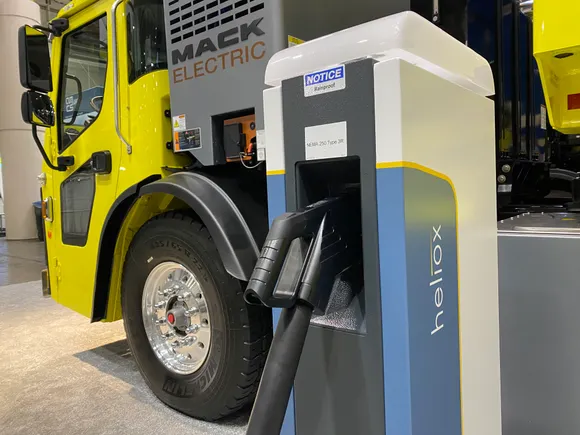
The Advanced Clean Fleets rule adopted by the California Air Resources Board (CARB) is putting pressure on refuse hauling companies, which must now achieve 100% zero-emission vehicle purchases by 2042. Manufacturers are only just beginning to scale up production of trucks that can meet demand, and haulers are scrambling for solutions. But as orders for battery-electric refuse trucks begin to pour in, many remain concerned about charging infrastructure and the technological advancements needed to meet the new regulatory deadlines.
"Innovation is difficult, and it's not a straight line," Republic Services CEO Jon Vander Ark said last week at the WasteExpo Investor Summit. "There will be ups and downs, bumps and bruises."
The timeline approved by CARB on April 28 requires refuse and wastewater fleets that previously used compressed natural gas (CNG) to achieve 10% zero-emission vehicles by 2030 and 100% by 2042. This timeline is later than requirements for certain other fleet types, a result of lobbying by waste industry members like WM due to their investments in CNG fleets and infrastructure. Diesel fleets will be phased out during the transition.
The rule is viewed as aggressive by truck fleet operators, but environmentalists and CARB consider it necessary. CARB noted in its release that trucks account for 25% of California's highway greenhouse gas emissions, despite comprising only 6% of vehicles on the road. Organizations like the Natural Resources Defense Council (NRDC) praised the move, which was passed alongside another emissions reduction regulation targeting rail, viewing it as progress in transportation decarbonization.
"This regulation will help drive the transition to cleaner, zero-emission trucks, create good jobs, and reduce pollution from the transportation sector, which is the state's largest source of greenhouse gas emissions," NRDC clean vehicles advocate Guillermo Ortiz said in a statement.
But at WasteExpo, executives from major haulers said battery-electric truck technology still struggles to meet the full needs of their fleets. Ron Mittelstaedt, recently returned CEO of Waste Connections, said the electric models he has seen cost twice as much as CNG or diesel trucks, have less than 60% of the payload, and run less than 25-30% of the distance.
"When you talk about those differences, the cost-effectiveness is only 20-22% of a CNG or diesel vehicle," Mittelstaedt said at the investor summit. "I don't think this is going to be ready for prime time very soon in a competitive market like Denver, Chicago, or Houston."
"Infrastructure concerns"
The biggest concern for many companies is the new charging infrastructure, which has drawn attention from California and the federal government, seen as an urgent need to achieve national electrification goals.
"The question that needs to be answered is the infrastructure issue," WM Chief Operating Officer John Morris said in an interview. "Having a reliable source to fuel these trucks every day is what we need to solve."
The National Renewable Energy Laboratory (NREL) identified 166 heavy-duty fleet charging stations nationwide in the third quarter of 2022, of which 101 were Level 2 chargers providing 25 miles of range after one hour of charging; 65 were DC fast chargers providing over 100 miles of range after 30 minutes of charging. But Tim Thornton, vice president and general manager of refuse at Autocar Trucks, said refuse haulers have not yet reached scale in using (and charging) electric trucks.
"Some customers are building infrastructure, but they're not building it for the entire fleet," Thornton said.
Republic is a hauler actively purchasing electric trucks. Vander Ark said the company currently has about 20 zero-emission trucks on the road, hoping to reach 50 next year. Republic typically purchases about 1,100 trucks annually. Vander Ark said his goal is to have up to 300 of those be battery-electric by 2025, and more than half battery-electric by 2028.
These investments will require additional backend work with utility companies to bring in the necessary infrastructure. Vander Ark said the company is spending some of its own funds to build charging infrastructure, with eight sites currently "breaking ground" to build electrical capacity.

"You can't put 200 trucks at every site," Vander Ark said. "We need to balance the screening, so start with 20 locations and then scale up."
According to NREL, California currently accounts for one-third of the nation's charging stations, although the East Coast has seen rapid increases in charging infrastructure recently. Vander Ark expects Republic's electric refuse truck rollout to follow a similar pattern, first meeting California demand, then moving to other East Coast sites, and finally entering the central U.S., potentially supplemented by hydrogen fuel cells when the technology becomes available. But smaller haulers face greater challenges in building infrastructure, said Veronica Pardo, regulatory affairs director at the California Resource Recovery Alliance. These haulers will rely on state and federal funds to finance charging infrastructure, as well as busy utility companies responsible for accelerating electrification across all industries, not just waste.
"When we talk about Republic, they have the capacity for larger-scale investments, whereas your smaller fleets do not," Pardo said. "For smaller fleets, they essentially have to work with local jurisdictions and communities to develop rate structures that support the necessary infrastructure."
The California Energy Commission expects to spend nearly $2 billion on electric charging infrastructure for medium- and heavy-duty vehicles between 2021 and 2026, with approximately $950 million spent to date, according to a spokesperson. Not all funds go to the waste industry. The CEC noted that the EnergIIZE Commercial Vehicles grant program has $183 million available, and the Medium- and Heavy-Duty Electric Vehicle Innovative Charging Solutions program will have $20 million available. Refuse haulers are eligible for these programs but will compete with fleets from other industries.
Beyond funding challenges, Pardo said some haulers in the organizations she represents have heard that utility companies face multi-year delays in building charging infrastructure, partly due to a backlog of new projects. CARB acknowledged this challenge in the final rule, allowing operators to apply for extensions of up to five years in implementing zero-emission rules when experiencing infrastructure delays. But Pardo said the rule text does not allow these haulers to purchase new trucks during the transition period, effectively leaving aging vehicles in place rather than replacing them with next-generation best available technology like CNG.
Meanwhile, vehicle manufacturers need to comply with the Advanced Clean Trucks rule, which similarly requires increasing percentages of zero-emission truck sales in California by 2039. Pardo said this could put haulers in an awkward position, stuck with "stranded" trucks they cannot replace during implementation.
"Manufacturers themselves have quotas to meet, so they're likely to tell California fleets: 'Sorry, we can't deliver this truck to you,'" Pardo said. "They're happy to sell in other states, but in California, they tell other states we can't sell to you."
Technological limitations
While pilot projects are launching, truck manufacturers at WasteExpo acknowledged that battery-electric vehicles cannot yet compete with the performance of CNG or diesel trucks. This issue is particularly pronounced in vehicle range, as vehicles are challenged by heavy loads, uneven terrain, and adverse weather conditions.
"The future hasn't fully arrived yet, so we're facing a collision course," Autocar Trucks President Jimmy Johnston said in an interview. "We have to remain realistic about timelines."
As cities increasingly write electric vehicle pilot requirements into waste disposal contracts, several manufacturers have begun piloting or expanding production of battery-electric refuse trucks. Mack Trucks has been piloting its LR Electric truck with the New York City Department of Sanitation since 2020 and recently received an order for seven more from the city agency. Meanwhile, manufacturers Autocar and Heil have begun demonstrating their own Class 8 trucks with WM, while Oshkosh-owned McNeilus has signed a long-term agreement with Republic Services to pilot and expand orders for its fully integrated electric refuse collection vehicles.

Michael Eastabrook, president and CEO of truck manufacturer Labrie Enviroquip Group, said he expects battery-electric trucks to become more common, but issues like charging infrastructure will prevent that fuel type from completely replacing CNG and diesel.
"This is a more nuanced conversation that needs to be had than our current political environment allows," Eastabrook said at the investor summit. "If the only route we're going to take is electric vehicles, they're going to hit a wall at some point, and the infrastructure won't support it."
Vander Ark noted that the vehicles Republic is piloting today have a range of just under 100 miles, sufficient for certain routes but unlikely to meet the needs of more remote communities. Other haulers advertise longer ranges under ideal conditions, but some are hesitant about specific numbers because conditions like snow can alter battery life. WIN Waste Innovations expects to pilot its own two electric rear-loader trucks in the Boston area, and CEO Robert Boucher said in August that these trucks will run on energy generated by WIN's waste-to-energy plants, with a range of six to seven hours.
Casella Waste Systems is also working with Mack to pilot its LR Electric truck in Vermont, partly thanks to a state grant. Founder and CEO John Casella said the company is also working with Battle Motors, but he believes careful consideration is needed in choosing the first markets for deployment.
"This is exciting technology. We'll continue to pilot it, continue to push it... but there's a long way to go in terms of effectiveness, especially in our region, because we deal with mountains and hills," Casella said.
Supply chain issues remain a focus for haulers and manufacturers. Patrick Carroll, president of Environmental Solutions Group, said delivery times for electric vehicles are currently slower than for internal combustion engine vehicles. He said this delay has shortened by several months since last year, and new battery manufacturers expected to come online in the U.S. this year could further reduce this lag. "We are seeing things start to improve," he noted.
Manufacturers typically take years to reach peak production of their electric models. However, once they do, they will find haulers eager to meet the demands of new restrictions—15 states plus the District of Columbia have signed a memorandum of understanding to transition medium- and heavy-duty trucks to zero emissions by 2050, and funding continues to flow into electrification through programs like the Inflation Reduction Act. Additionally, a growing number of states are directly adopting California's Advanced Clean Trucks rule, indicating a sea change in electric vehicle production and adoption is underway.
"Expect the early years to be more difficult, and after 2030, we'll start rolling," Pardo said. "That's the idea, anyway."
Disclosure: WasteExpo is operated by Informa, which owns Industry Dive, the publisher of Waste Dive. Informa has no influence over Waste Dive's coverage.