
Low-Carbon Fuels and Credit Mechanisms: The Transition Path of U.S. States Toward Zero-Emission Policies
U.S. states are accelerating the legislation of Low-Carbon Fuel Standards (LCFS), incentivizing the production of fuels such as landfill biogas and renewable natural gas through credit trading mechanisms to reduce the carbon intensity of the transportation sector. New Mexico has become the fourth state to legislate, with industry and environmental organizations competing over the policy direction.
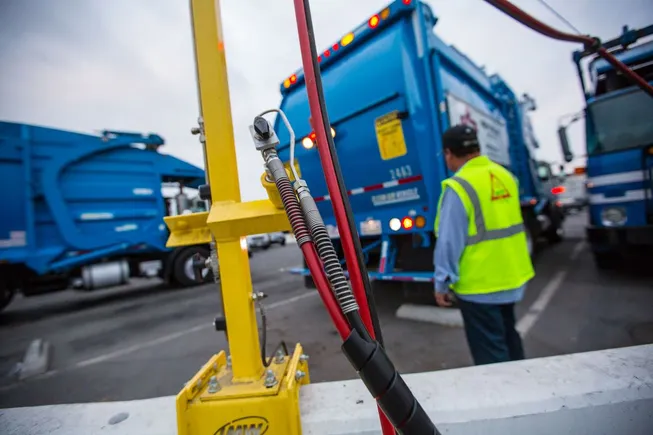
State legislatures across the United States are intensively considering bills for credit programs targeting low-carbon fuels, including those derived from landfills and other waste sources. Such policies set timelines for fuel producers to gradually reduce the carbon intensity of their products by blending existing low-carbon fuels like ethanol or by purchasing credits from producers of lower-emission fuels such as renewable natural gas produced from landfill gas or anaerobic digestion.
Supporters point out that the spread of such policies has benefited from some unexpected coalition partners and may be accelerated by the success of California's Low Carbon Fuel Standard (LCFS) and other early models that first emerged on the West Coast. If more states establish such programs, it is expected to boost the so-called "brown rush" that has already attracted the attention of some major players in the waste industry and brought in millions of dollars in new revenue.
"Without a low-carbon fuel standard, you really can't achieve a zero-emission future, because without carbon-neutral fuels, it's impossible," said Todd Campbell, vice president of public policy and regulatory affairs at Clean Energy Fuels, an RNG producer. "This is really helping us move in that direction, and I think the opportunity is just beginning to reveal itself to many people, especially those in the waste industry."
A 'win-win' situation
In early March, New Mexico Governor Michelle Lujan Grisham signed House Bill 41, making the state the fourth in the U.S. to implement a clean fuel standard program. The bill sets a target of reducing the carbon intensity of the state's transportation fuels by 20% by 2030 and includes provisions to ensure that rural electric cooperatives common in the state, as well as traditional biogas producers, can participate.
"This is a win-win-win-no-lose piece of legislation," Grisham said at a press conference announcing the signing of the bill.
New Mexico is one of the largest fossil fuel oil and gas producing states in the U.S., with a relatively small biofuels industry. According to the American Biogas Council, the state currently has only 16 biogas production facilities: 12 at wastewater treatment plants, 3 at landfills, and 1 manure digester.

But the industry group estimates that under supportive policies like the clean fuel program, the state could accommodate as many as 144 such facilities, considering existing landfills, farms, and estimated wasted food that could be beneficially reused. These facilities could produce up to 13.7 million mmBtu of energy annually, equivalent to heating 892,000 homes in New Mexico.
This potential has long attracted the attention of the state's Democratic governor and her allies, who have pushed for clean fuel legislation for about four years. Supporters say they have observed fuels like renewable diesel produced in Texas passing through New Mexico en route to California, and now they can compete for those producers.
"Let's rethink how these fuels are produced, transported, and used, and ensure that those renewable diesel trucks stop here," said Michelle Miano, director of the New Mexico Environment Department.
Nationwide, states are taking note of the economic impact of California's program. Currently, eight state legislatures are considering related bills, with groups from the Midwest to the East Coast increasingly eager to see programs implemented.
For years, the U.S. Environmental Protection Agency's (EPA) Renewable Fuel Standard (RFS) has been a primary driver of revenue for biogas projects. Clean Energy Fuels, a biogas developer with six operating facilities and several under construction, still derives significantly more revenue from federal RIN credits created by the RFS than from California's program, according to its 2023 financial report.
But if more states continue to pass their own legislation, they could significantly expand revenue opportunities for waste-derived fuels, especially in densely populated areas like New York and New Jersey. However, as these ideas enter the mainstream, they will face scrutiny from environmentalists eager for electrification and from the oil and gas industry seeking to maximize profits in the booming alternative fuels sector.
The largest U.S. waste companies have turned to RNG in recent years to capitalize on incentives created by the LCFS and its companion programs.
Republic Services (which declined to comment for this article) plans to increase the percentage of biogas from its facilities used for beneficial reuse by 50% by 2030. Meanwhile, WM recorded $273 million in net operating income from its renewable energy business, including RNG, last year, and cited "federal and state incentive programs" as a primary driver of growth for that segment in its 2023 year-end filing.
WM also supports new clean fuel programs in states like New Mexico, New York, and Minnesota, "the three states with the strongest momentum for potential legislation," said John Skoutelas, WM's vice president of law and national director of government affairs, in an emailed statement.
A shift in attitude from oil giants
The seeds of California's Low Carbon Fuel Standard were first planted by the 2006 Global Warming Solutions Act, signed by then-Governor Arnold Schwarzenegger. At the time, the U.S. was just beginning to blend ethanol into petroleum, and it would be nearly a decade before the Paris Agreement formally established a global response to the climate crisis.
The LCFS was first approved by the California Air Resources Board (CARB) in 2009 and implemented in 2011, sparking a series of lawsuits from the oil and gas industry. This staunch opposition continued when Oregon decided in 2012 to follow California's lead and implement its own clean fuel program.
"The oil industry wasn't too excited about another regulation requiring them to reduce greenhouse gas emissions," said Tim Zenk, managing director at Earth Finance, a climate strategy firm. "They fought it hard."
But those challenges were largely unsuccessful, and the program itself began to pay off. In the decade since CARB implemented it, the LCFS has reduced greenhouse gas emissions in the transportation sector by 137 million metric tons of CO2 equivalent and spurred $4 billion in renewable fuel infrastructure investment, according to a spokesperson for the agency.
Today, California has certified the carbon intensity of 441 facilities that produce methane fuel from biogenic sources. Of those, 188 are dairy manure digesters and 192 are landfills, according to agency data.

The oil and gas industry began to take notice of the program's success. In 2020, BP partially withdrew from a regional oil and gas lobbying group due to its opposition to Washington state's clean fuel standard proposal. The company instead chose to take a neutral stance on the bill, as reported by The Seattle Times at the time.
Since then, BP has intensified its pursuit of biofuels while supporting clean fuel program legislation in multiple states, though not in New Mexico due to its limited operations there. These efforts were accelerated by BP's massive $4 billion-plus acquisition of landfill gas company Archaea Energy in 2022. BP now aims to increase its biogas supply sixfold by 2030.
ExxonMobil has also made significant investments in renewable diesel, including Canada's largest renewable diesel project. Such facilities, along with projects from companies like Valero, Chevron, and Marathon, have saturated California's LCFS credit market, which currently faces a credit surplus as capacity continues to come online.
"The obligated parties—Shell, BP, Total, Chevron—they initially had to buy credits... then they looked further and said, 'What's the better compliance strategy?' That's to get involved," Campbell said. "Now they're not just buyers of these credits, they're active market participants, and they're converting refineries from crude oil refineries to renewable diesel refineries."
This shift in attitude has cleared the way for new clean fuel programs in states including New Mexico. There, both ExxonMobil and Occidental Petroleum (Oxy) expressed support for the proposal, which Robin Vercruse, executive director of the Low Carbon Fuels Coalition, said would support further renewable diesel production in the state and allow these companies to enhance their climate credentials.
"New Mexico itself is opening a lot of people's eyes. People are saying, 'Wow, if New Mexico can do it—they're the second-largest oil and gas state in the country—why can't we?'" Vercruse said.
This boom in investment in alternative combustible fuels—driven by these clean fuel programs rather than electrification—is raising concerns among environmental groups. Kiki Velez, equitable gas transition advocate at the Natural Resources Defense Council (NRDC), believes that after more than a decade of supporting such fuels, the LCFS needs reform.
In NRDC's view, today's clean transportation programs should focus on incentivizing electric mobility and reserving biofuels for sectors that are truly hard to decarbonize, as policies like the Advanced Clean Fleets rule do. They note that research shows the LCFS has directed over $5.8 billion to farm digester projects and crop-based biofuels, and argue that future investments would be better directed elsewhere.
"When (the LCFS) was first developed, it was a race to see what the right fuel and/or other energy resource for decarbonizing the transportation sector would be," Velez said. "There wasn't a clear winner at the time. Now we know—CARB has stated that all-electric is the way forward."
Lessons from California
The federal government has previously threatened the fuel industry with legislation and regulation, but the tug-of-war between oil and gas and agricultural interests has made a national clean fuel program unviable. Zenk said that may not be a bad thing.
Zenk, who worked for years with alternative fuel producer Sapphire Energy during the rollout of West Coast clean fuel programs, said each new program brings localized opportunities.
In Washington state, the program includes environmental justice provisions requiring air pollution mitigation near disadvantaged communities and ensuring that other program benefits, such as charging infrastructure, are specifically located in those communities. Zenk said states discussing clean fuel programs today can address the particularities of their greenhouse gas challenges through state-level efforts—for example, aviation accounts for twice as much of Hawaii's transportation greenhouse gas emissions as it does in Washington state.
As new programs come online, they can now reference the structure of California's LCFS and the carbon intensities CARB has set for different fuels under the program, saving administrative costs, said Dana Adams, state legislative policy manager at the Coalition for Renewable Natural Gas.
"CARB can say, 'Your process goes from x digester, through y processing, to here, and then to end use, with a carbon intensity of negative 10,' for example. Then Oregon can look at it and say, 'Well, CARB has already done the math. Let's just copy their homework,'" Adams said.
Each state can also choose how aggressive it wants to be in its carbon reduction trajectory. For example, Oregon is currently ramping up its carbon intensity reduction targets faster than California's current path, even as CARB explores its own stricter pathway.
Perhaps the most attractive state for renewable fuel producers is New York, where the state chapter of the League of Conservation Voters has been building support for the past three years. A clean fuel standard bill setting a 20% reduction target by 2031 passed the state Senate but failed to advance in the Assembly. Patrick McClellan, the group's policy director, said advocates hope to pass it this year as part of the state budget or as a standalone bill.
The group has also found some unexpected allies. It leads a coalition that includes major airlines, ethanol producers, automakers, and biogas groups. BP is also lobbying for a program in New York, but McClellan said the coalition has strict rules barring oil and gas companies from joining.
While seeing environmental groups and fossil fuel giants aligned may seem odd, McClellan said the New York League of Conservation Voters came to the issue naturally, and noted it is no different from supporting offshore wind projects when oil producers bid on them.
"If they want to support it, great, the more the merrier," McClellan said. "We do see this as an important piece of the transportation decarbonization puzzle."
New York's biogas potential is enormous—the American Biogas Council estimates the state has the potential to build over 300 new facilities, most of them in the manure sector. At full build-out, the state could produce 52.3 million mmBtu of thermal energy annually, nearly four times that of New Mexico.
Beyond the raw numbers on gas potential, legislation in New York and New Jersey would be an influential shift that gives clean fuel programs a foothold on the East Coast, said Campbell of Clean Energy Fuels. He noted that while proposals take time to gestate in state legislatures, once they catch on, they can have an impact.
"I'm really looking forward to seeing New York and New Jersey adopt these standards," Campbell said. "When these states adopt clean fuel standards, the scale won't be as large as California's, but it certainly signals that these are important policies worth considering for other states."