
Supreme Court Ruling Could Reshape Freight Brokerage and Small Carrier Industry
The U.S. Supreme Court is currently hearing Montgomery v. Caribe Transport II, a case concerning whether freight broker C.H. Robinson Worldwide should bear legal liability for a carrier's safety negligence. The ruling could reshape the business environment for freight brokers and small carriers, impacting carrier selection, insurance costs, and supply chain efficiency.
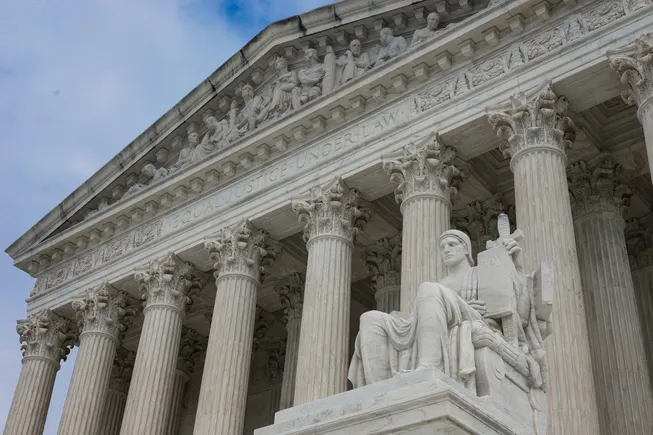
Freight brokers and motor carriers could face a vastly different industry landscape depending on a Supreme Court ruling in a case with potentially far-reaching implications.
The case, Montgomery v. Caribe Transport II et al., involves a tractor-trailer striking a parked Mack tractor-trailer on an Illinois highway in December 2017. The core dispute centers on whether freight broker C.H. Robinson Worldwide should bear legal liability.
According to plaintiff Shawn Montgomery's complaint, a commercial vehicle struck a legally parked truck at full speed at the time of the accident. Montgomery was severely injured in the crash, resulting in the amputation of a leg. Court documents show he also sued the driver, the carrier, C.H. Robinson, and its affiliates, and that his medical needs are ongoing.
When truck accidents involve freight brokers, injured parties sometimes sue the broker under state tort law, arguing negligence in the selection of motor carriers—that the broker knew or should have known the carrier's safety practices were substandard. Legislative attorney Bryan Adkins noted this in a Congressional Research Service report.
But the case could have legal implications for businesses nationwide: notably, it could clarify the extent to which specific liabilities under state tort law apply or do not apply. This touches on a long-standing principle in U.S. law—federal preemption—which freight broker supporters say protects them from vicarious liability for motor carrier safety failures.
"The core question is whether 1990s federal law was designed to shield brokers from state-level negligent hiring claims when selecting carriers," Ryan Wilson, vice president of broker engagement at Matterhorn Insurance Group, said in an email. "Some courts say yes, others say no, which is why the Supreme Court stepped in."
The Federal Aviation Administration Authorization Act and its 1995 expansion were intended to create a national framework so brokers and carriers would not be subject to a patchwork of state regulations targeting their services, brokers and related advocates say. The safety exception clause reserved for states in federal law adds further complexity.
"For nearly a century, federal law has comprehensively regulated interstate trucking, and Congress explicitly preempted states from using tort law to impose new obligations on freight brokers and shippers," C.H. Robinson also stated in a press release about the case.
The outcome is critical for industry stakeholders because the Court could:
- Protect brokers from claims such as negligent hiring
- Find brokers vulnerable to state tort law, with liability varying by location
- Issue other rulings yet to be observed
"The most likely outcomes are either a preemption-affirming ruling (the position supported by the U.S. government) or a narrow textual ruling that resolves the circuit split without delving into all downstream issues," Husch Blackwell transportation attorneys said in an email.
If the Supreme Court rules in favor of Montgomery, it could overturn rulings from multiple lower courts.
Potential far-reaching impacts on brokers and small carriers
Brokerage firms, transportation companies with brokerage operations (such as ArcBest, J.B. Hunt Transport Services, and Saia), and manufacturers have warned the Supreme Court of the risks of this case.
These advocates say a ruling for the plaintiff could create supply chain inefficiencies, raise costs, and even destroy "hundreds of thousands of small trucking companies," according to amicus briefs.
These concerns stem partly from the possibility that brokers may change the types of carriers they select depending on the case outcome. This could mean small carriers are overlooked in favor of larger ones, "regardless of their individual safety records," one brief submitted to the Court stated.
A reduced number of carriers would drive up rates for remaining carriers, with costs passed on to manufacturers, retailers, and consumers, C.H. Robinson said in its brief.
"If brokers cannot rely on federal standards, the resulting patchwork of liability could have real downstream impacts," said Harry Byrne, a partner at Duane Morris.
Brokers' insurance rates could rise, and some brokers might even exit the market due to prohibitive costs, he said.
"I think these are significant practical implications of a potential ruling, and why there should be a single uniform standard rather than each state having its own—in reality, the strictest state would set the standard for everyone," Byrne said.
During oral arguments on March 4, Justice Brett Kavanaugh expressed concerns about such market ripple effects. Matt Reh, a partner at Armstrong Teasdale, said Kavanaugh's questions indicated he was trying to assess how the current state of the law and potential legal changes affect the daily operations of the logistics industry. Reh primarily handled this case for C.H. Robinson at the district court and appellate court levels.
Reh said that if the ruling favors the plaintiff, property freight brokers might lean toward selecting mid-sized or large carriers based on assessments of those entities' ability to meet regulatory requirements. This could force brokers to rethink how they work with motor carriers and their carrier selection.
"For me, the question is how far will the Supreme Court go? Will it say there's no preemption? Will it say preemption is limited to negligent hiring and retention claims, or will it say all claims arising from alleged negligence are preempted?" Reh said.
Additional changes may come regardless of the outcome
Congress is watching this case, and the outcome could prompt the losing side to seek legislative remedies.
But independent of this case, lawyers say the more control a broker exerts over a carrier, the greater its potential legal liability.
That is because in such scenarios, the broker shifts from an intermediary role to "more like a de facto employer, which raises liability risks beyond negligent selection," Husch Blackwell attorneys said.
Reh said this involves a body of law that exists in every state and is referenced in different ways.
"Some call it agency," he said. "Some call it vicarious liability. Some refer to it in Latin as respondeat superior."
Reh said this principle can impose liability on those responsible for the conduct or negligence of controlled individuals. This could include giving instructions to drivers, contractually requiring regular check-ins, or requiring carriers to display broker logos on trailers, lawyers said.
Currently, brokers already spend considerable time vetting carriers before assigning loads, Wilson noted.
"Most verify a carrier's FMCSA authority, insurance coverage, safety scores, inspection history, and operating status to ensure the company is legally authorized and compliant," he said. "Many brokers also use third-party screening tools and internal policies to continuously monitor carriers. Significant money is being invested in these tools."
But these are largely limited to public information, rather than operational data held by regulators or carriers themselves, such as driver records, internal safety practices, or day-to-day vehicle maintenance, Wilson said.
Contracts requiring further disclosure from carriers or transformative laws could change these dynamics. But as of now, brokers already have significant expenditures in vetting carriers and lack access to the Federal Motor Carrier Safety Administration's drug and alcohol information database, he said.
"That's one of the things that makes this complicated," Wilson said. "Brokers are being asked to evaluate carriers without access to some of the deeper safety data visible to regulators or carriers themselves."